/DonateIcon.svg)

How the Calgary Stampede became one of the most prolific music festivals in Canada –– and what that means for local talent.
In 1884, the newly formed Calgary and District Agricultural Society promoted the recently-minted town of Calgary as an optimal meeting place for the area's farmers and ranchers to convene. It took a couple of years, but soon a fair was enacted, attracting about 500 of Calgary’s 2,000-person population. Five years later, the CDAS defaulted on the mortgage used to purchase the 94-acres along the Elbow River we know as Victoria Park, and was forced to relinquish it back to the now-City of Calgary, who kindly leased it BACK to the freshly reorganized Inter-Western Pacific Exhibition in 1901. EDM, or Electronic Dance Music, was roughly three-quarters of a century away from conception.
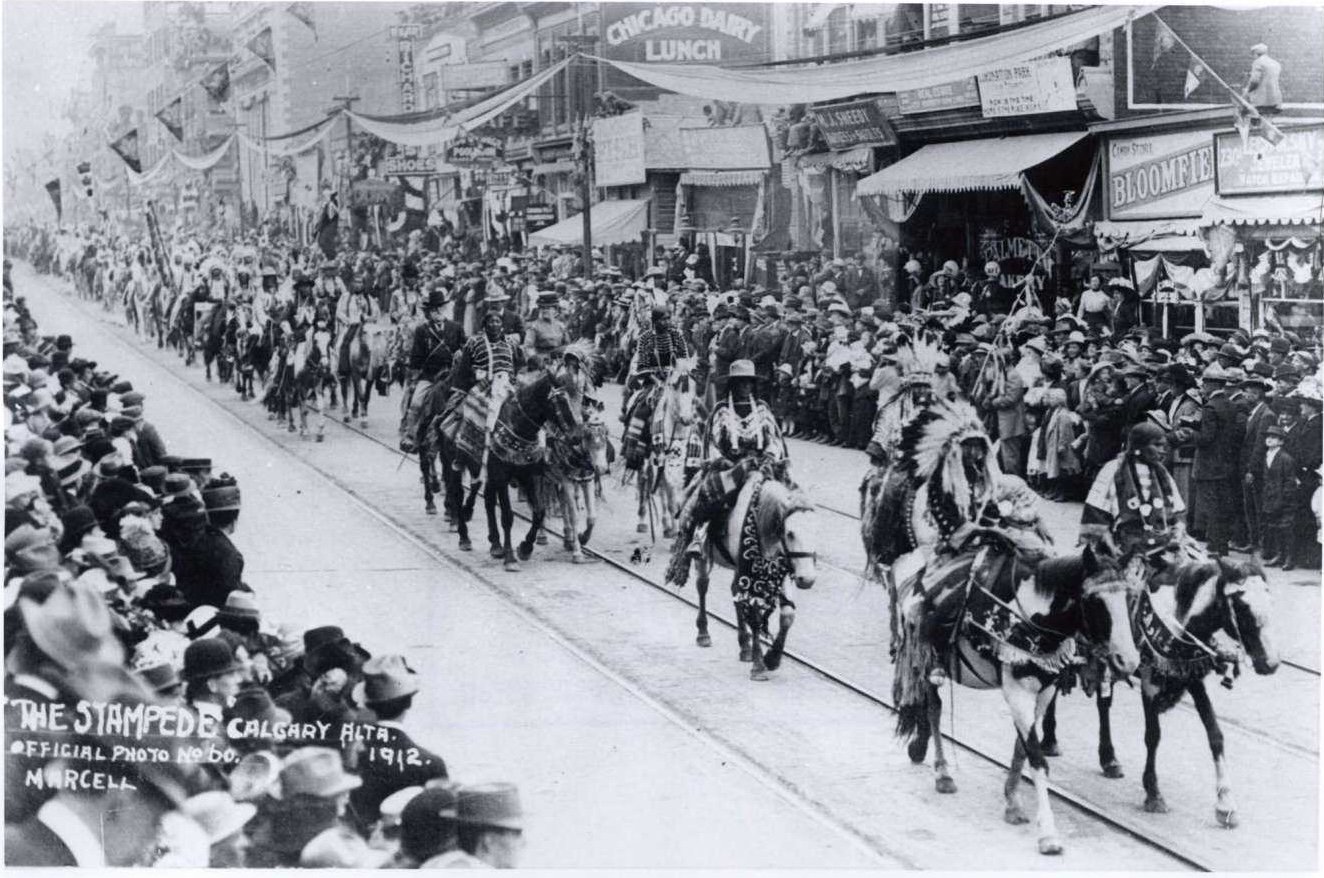
By 1908, The Exhibition was like something Canada had not seen. A decade of growth resulted in a new crop of swanky pavilions and cutting-edge racetrack, suitable new grounds funded by the government to host a rodeo, races and trick roping, food and drink, and the Miller Brothers 101 Ranch Wild West Show (fun for the whole family!). The opening parade was extravagant and lavish, featuring Strobel’s Airship, a hydrogen-filled dirigible that swooped over the opening parade, dipping and soaring through the sky until it hit the grandstand and exploded over the festivities. With that, the Greatest Outdoor Show on Earth was born. Quadrupling Calgary’s population for ten days, the basis of the Stampede was conceptualized, attracting locals, yokels, hustlers, businessmen, partiers, sights and smells. It was built, and so they came. From the jump, it was quite a sight to see. But what was heard took significantly longer to round into what we know to be the Stampede and its associated music festival to be.
At the turn of the 20th century, the Exhibition’s music was an informal affair, limited to street-corner fiddlers and the powwow chants emanating from the banks of the Elbow. The North-West Mounted Police Musical Ride would soundtrack the parade in its earliest iterations. In 1964, a Grandstand show was born with the lofty goal to rival network television concerts like Ed Sullivan’s, and thus the Calgary “Kidettes” debuted. In their shadow, a 20-year old Joni Mitchell performed a couple of well-received sets at the Calgary Corral (elsewhere, Ken Kesey and his Band of Merry Pranksters — some of whom would go on to help form the Grateful Dead — rocked and rolled and quite literally spiked the punch at an unwitting party, helping introduce the psychedelic movement to western Canada).
It wasn’t until 1971, with the introduction of the Calgary Stampede Showband, that music became a fundamental part of the Stampede's attraction. In 1983, with our snazzy new Saddledome, global icons like Kenny Rogers, Rod Stewart, Sting and Bon Jovi helped expand the musical offerings beyond the traditional country-western aesthetics, helping boost Calgary’s profile as a desirable touring location (that also happened to pay pretty well during its busiest week every year). A smaller stage was built on the grounds outside the Dome, later to be dubbed the Coke Stage, packing the exhibition grounds even tighter with concert potential. Soon, music spilled out of the Stampede grounds and flooded the city.
The '90s are when music became as big of a draw for Calgary and/or the Stampede as the beer and steer. The “original Stampede party tent,” Nashville North, was erected for the first time in 1992 to keep Calgary’s country heart, but across the city, the call to booking managers of all genres started to ring. It was here that the Stampede emerged as a full-fledged musical festival that, depending on who you ask, overshadows the rodeo at its spiritual core. The name most prominently advertised in this regard is Cowboys Casino, who launched the Cowboys Music Festival in 1999 and largely brushed off the Stampede’s strict association with, ironically, country music. In its inaugural year running concurrently with the Stampede, it hosted The Barenaked Ladies and either Shania Twain, or a Shania Twain lookalike, to kick off what is now a powerhouse Canadian festival. It’s influence wasn’t long to take hold of other Calgarian's businesses like Concorde Entertainment, who opened the Wild Horse Tent in 2009, or even beyond; the electronic-music focused Badlands tent, which opened in 2019, is run by Blueprint Events, a Vancouver-based company.
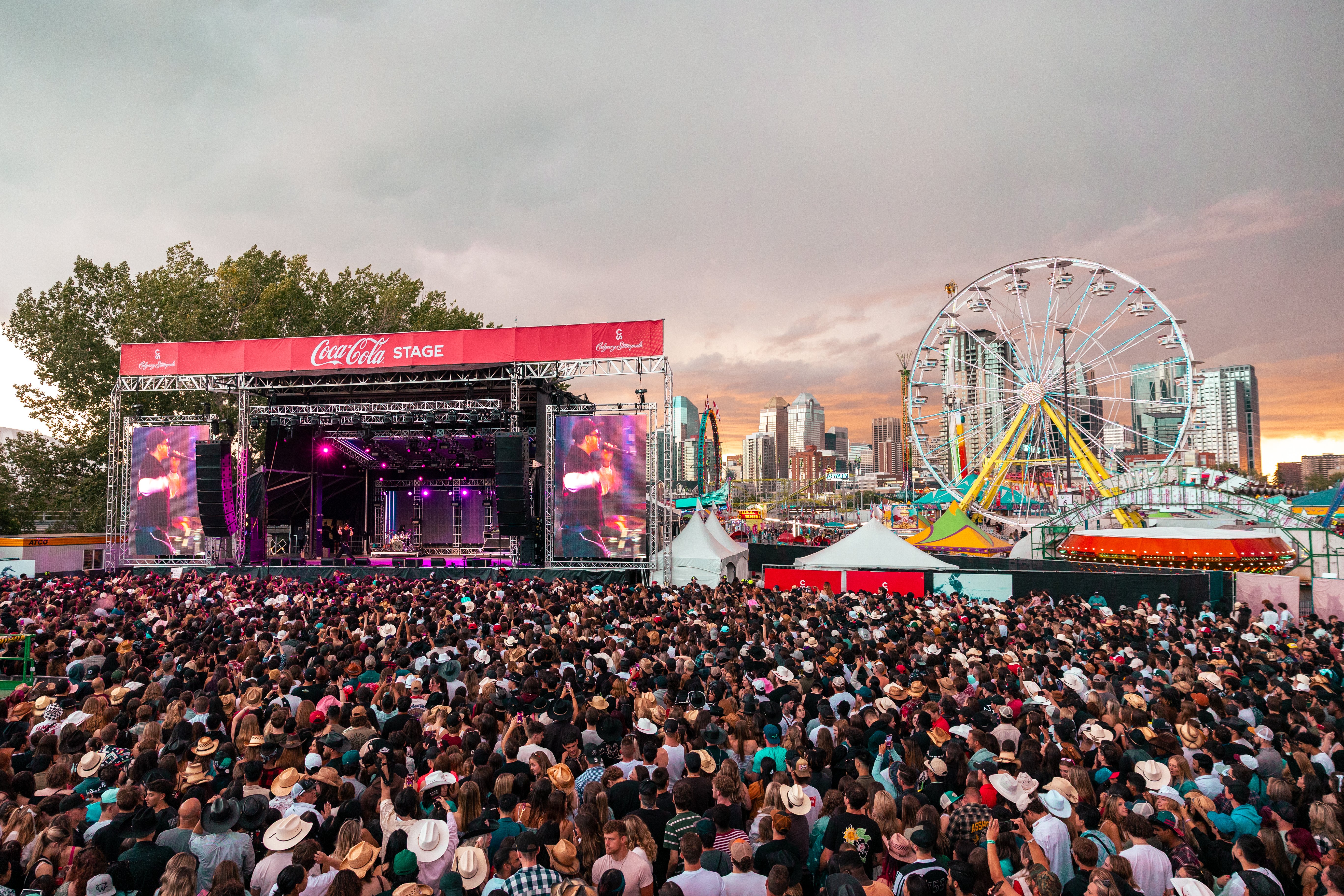 So now, in 2026, with over 100 concerts scheduled for Stampede, the problem isn’t finding a good show, but whittling down the good shows you want to experience. Do you want country music? Well, you still have your pick of the litter: Bailey Zimmerman, Chris Young, Russell Dickerson, Hudson Westbrook and Ashley McBryde are just a few of the more traditional country music stars who will be sharing stages this July. Into pop? Well then you can go see Alessia Cara or The Beaches or Dominic Fike. Rap? BigxThaPlug and A$AP Rocky will be making appearances. There’s a bevy of electronic artists that will be rattling windows. There are classic acts like Billy Idol and Alannis Morissette.
Of important note is the literal and figurative stage the Stampede’s music drive allows for local talent.
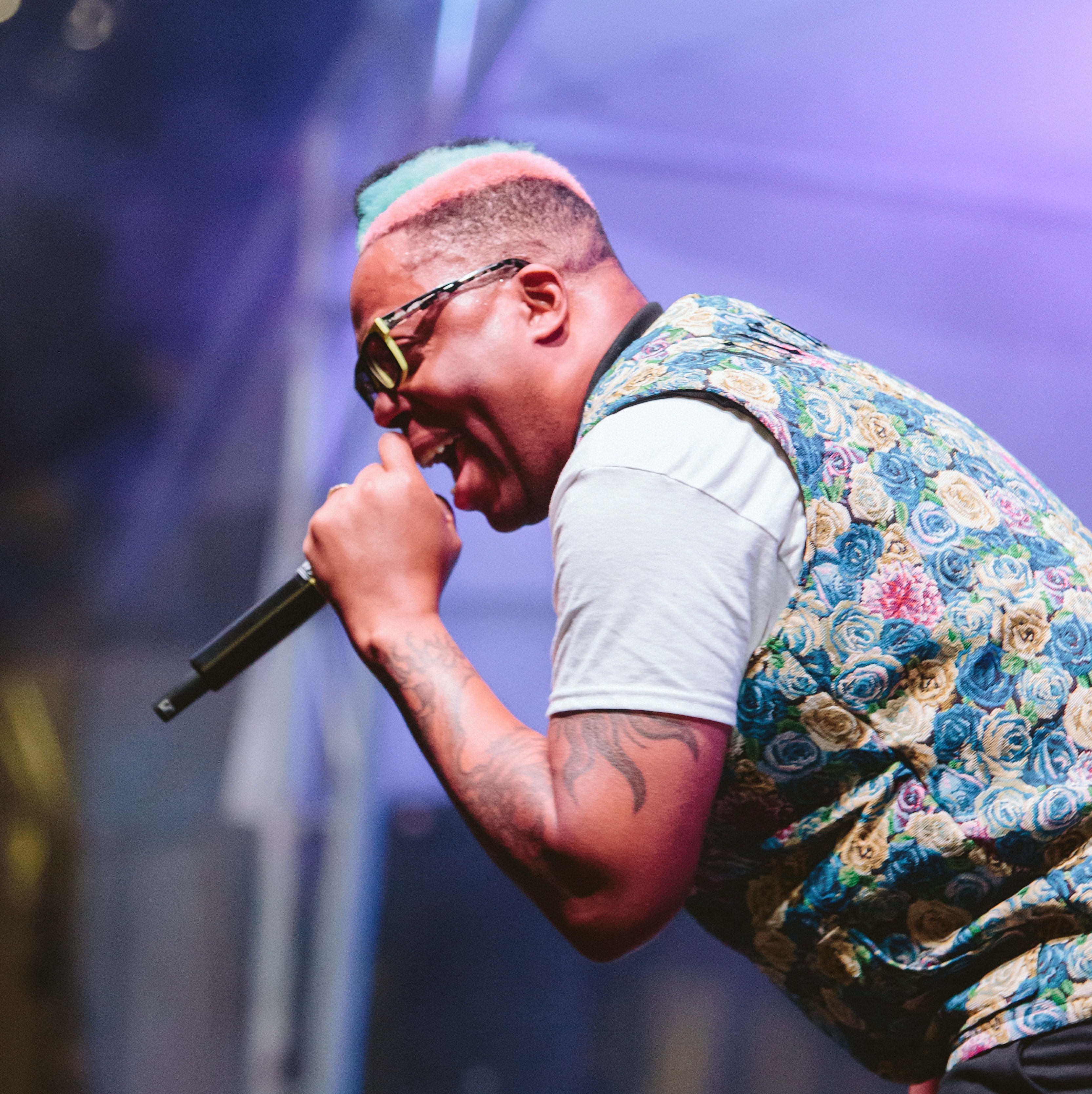
“When I was younger, I spent a lot of time at the Stampede grounds with family, and in my teens, I spent time performing in the Stampede Talent Search,” says Zenon, a Calgary-based musician. "I would wander around the grounds daydreaming about the possibility of being on the Coke Stage and remember moments where I told myself one day I’d get up there, somehow.”
It’s both an attainable goal and a breakthrough moment for many of Calgary’s talents, not to mention a platform to expand reach beyond what’s realistically available for the majority of Calgary’s burgeoning names. For Jubs (Julie Olive) of the alt-pop group SHY FRiEND, it’s a mammoth stepping stone. “Playing at the Coca Cola Stage at Stampede gives us the opportunity to scale the SHY FRiEND project into a show worthy of main-stage festivals. We’ve used this opportunity to form a full brass band, and are inviting some of my favourite local drag artists to join us on stage.”
Like Zenon and SHY FRiEND — both alumni of Werklund Centre's TD Incubator program — there’s a bevy of local artists who will be gracing the Coke Stage, seizing an opportunity to perform before some of the largest audiences of their respective careers.
A hundred years ago, the Stampede included music as accoutrements to the agricultural show. Today, there’s a legitimate argument that those roles are reversed. In a couple of weeks, 150 artists will be performing at a dozen different venues for over 500,000 attendees. Those numbers alone would make it Canada’s largest music festival, surpassing Montreal’s Osheaga Music and Arts Festival and Le Festival d’été de Québec. It began as a gathering of ranchers and cowpeople; now, it’s just for people. Not everyone can cinch a saddle, or hogtie whatever the hell people hogtie. But we can all dance. Either way, the Calgary Stampede can cater to you.
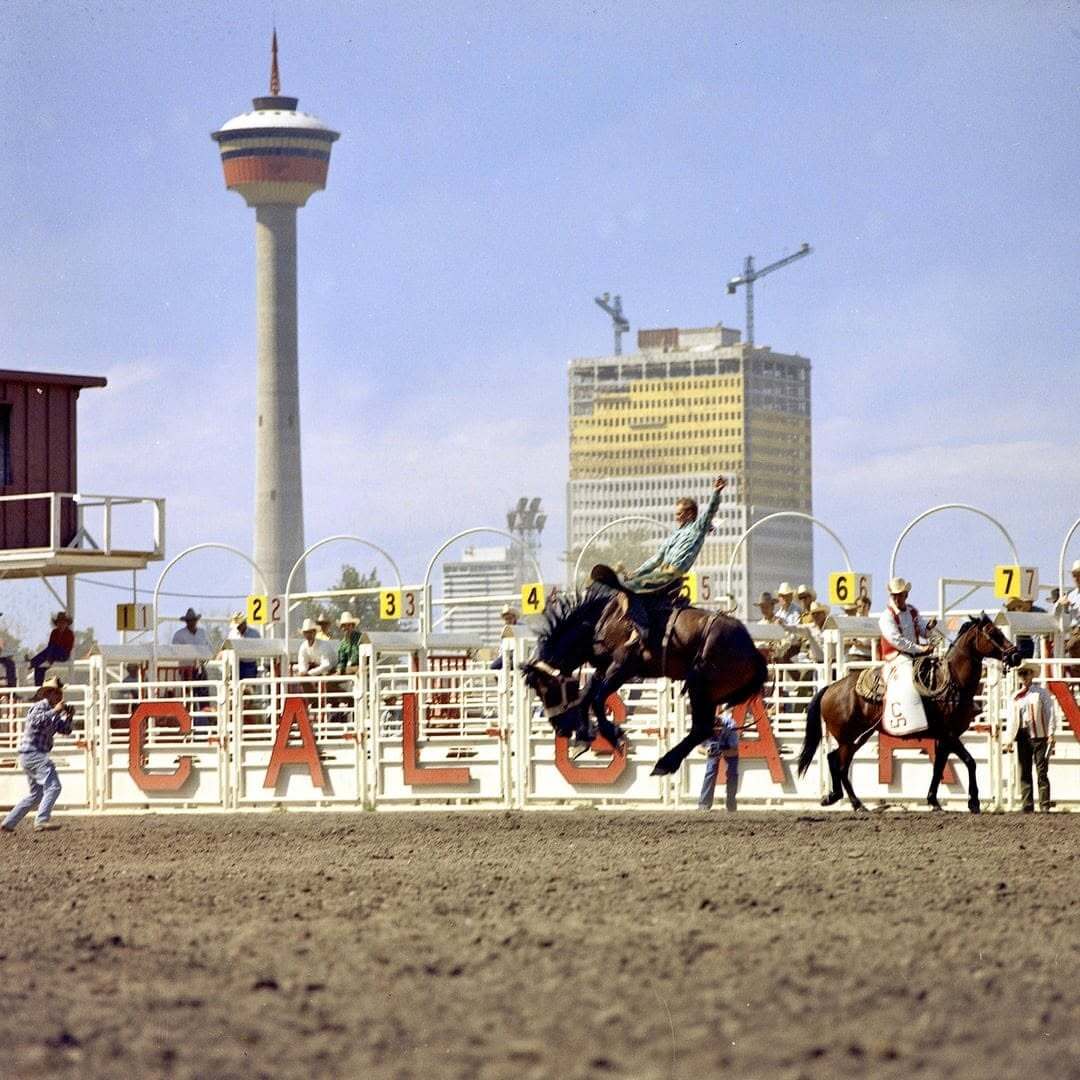
Header image: Calgary Stampede, 1971, Provincial Archives. Photos courtesy of the Calgary Stampede/Sam Centre.
Thomas Johnson is the tallest rap critic in Calgary. His work has yet to appear in the Louvre. You can find him listening to all sorts of everything at Blackbyrd Myoozik.
Share this post



.jpeg)