/DonateIcon.svg)

From Canada’s first rap records to Calgary’s underground pioneers, explore the roots of hip hop in our city.
Hip Hop was born on August 11, 1973, at a back-to-school party hosted at the recreation room of 1520 Sedgewick Avenue, South Bronx, NY, when DJ Kool Herc played a single record on two turntables simultaneously, crossfading between the two LPs so as to stretch out the drumbeat over itself, unbeknownst to him creating a genre that would in the following decades come to dominate urban radio, leak into every other genre, and become the defacto sound of the internet age. The first commercial hip hop single, The Sugarhill Gang’s “Rapper’s Delight,” was released on September 16, 1979, paving the way for a whole new musical world — and a different breed of artist — to emerge.
Not two weeks later, Canada set foot ashore this brave new world. Toronto’s Mr. Q released “Ladies Delight” on Monica’s Production, a fledgling disco/reggae label out of Toronto. Mr. Q, who passed away in 2021, is the de facto groundbreaker of Canada’s rap industry, despite the fact that his legacy was overlooked or misattributed for decades. In his wake, a Toronto scene erupted. The first Canadian rap album, Rap The Night Away by The Bobby Deemo Band, came out on the first day of 1981. By 1983, the country's first hip hop radio program, The Fantastic Voyage, launched on Toronto’s CKLN-FM. On the opposite coast, In Effect, Vancouver’s first all-rap show, kicked off in 1987.
Maestro Fresh Wes’ debuted in 1989 with “Let Your Backbone Slide.” In 1991, Main Source released Breaking Atoms (featuring an 18-year-old Nas), one of the most important rap albums ever produced. Rap Essentials Volume One, the revolutionary compilation of Canadian hip hop, dropped in 1996, showcasing the talents of Kardinal Offishal, Choclair and Citizen Kane, to name a few. In 1998, Vancouver group Rascalz refused to collect the Juno for Best Rap Recording, and in 1999 Saukrates released The Underground Tapes, with guest appearances by some of the most notable American rappers of the era. While it had a long journey towards becoming a powerhouse genre, the age of Canadian Hip Hop was upon the country.
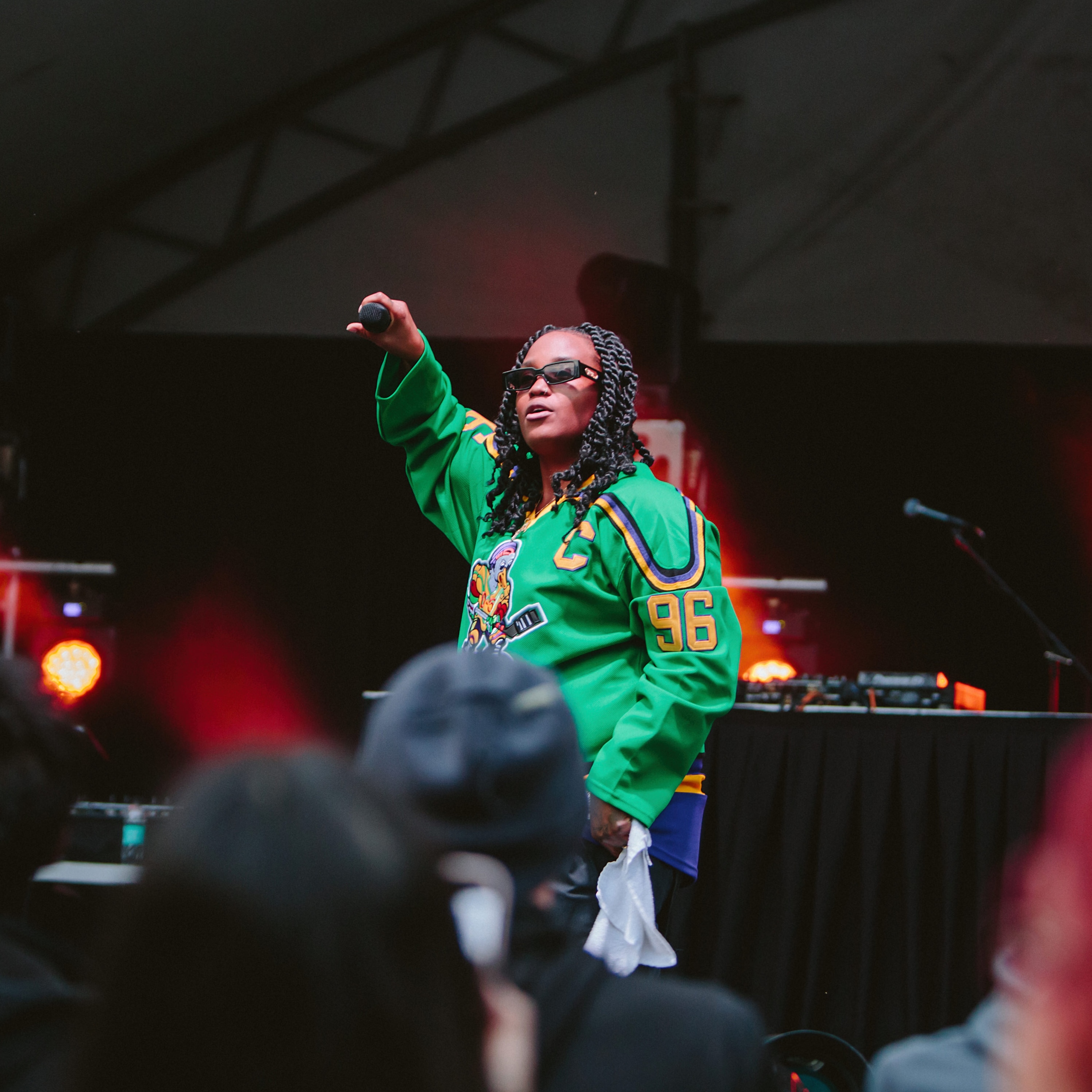
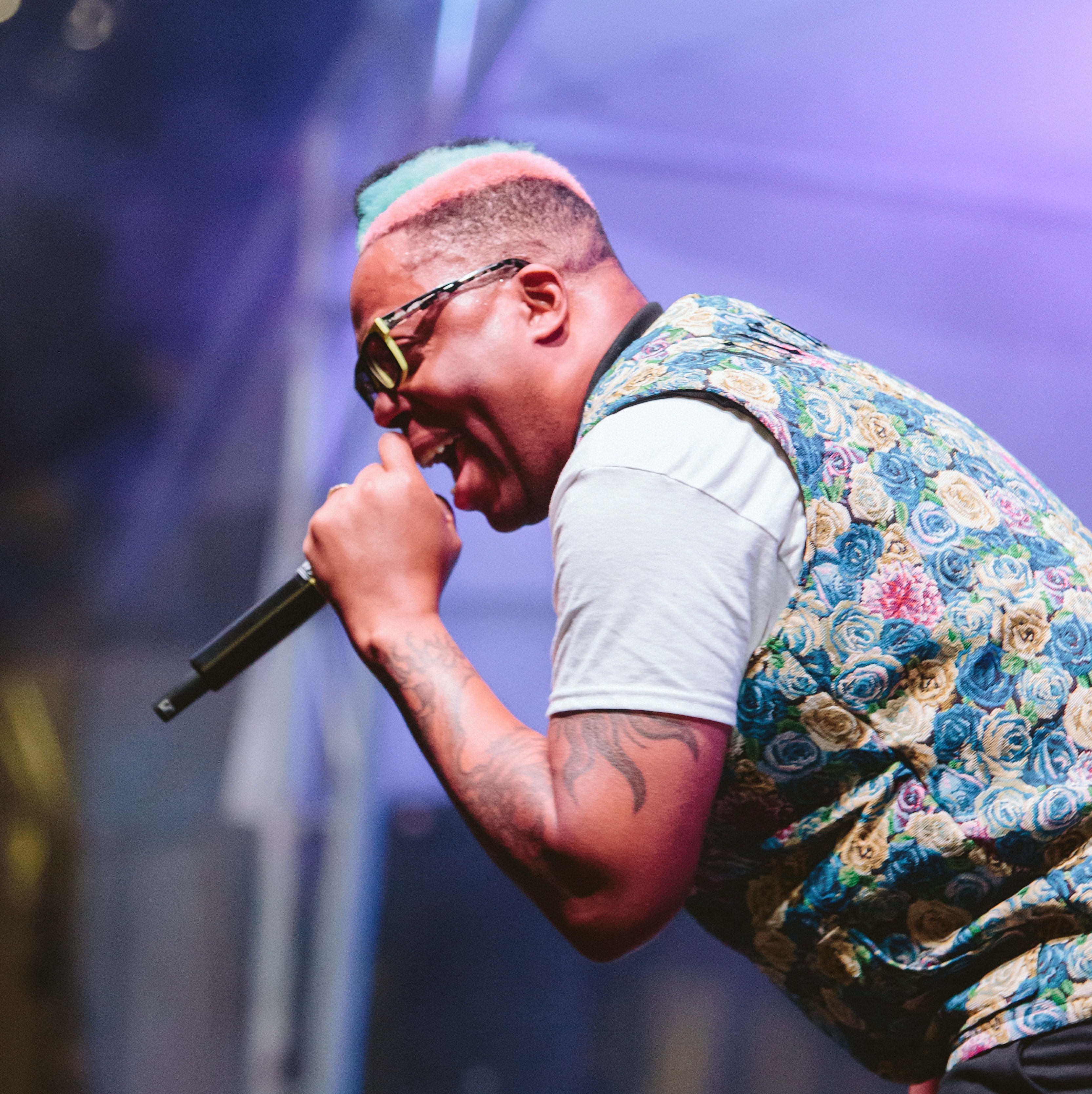
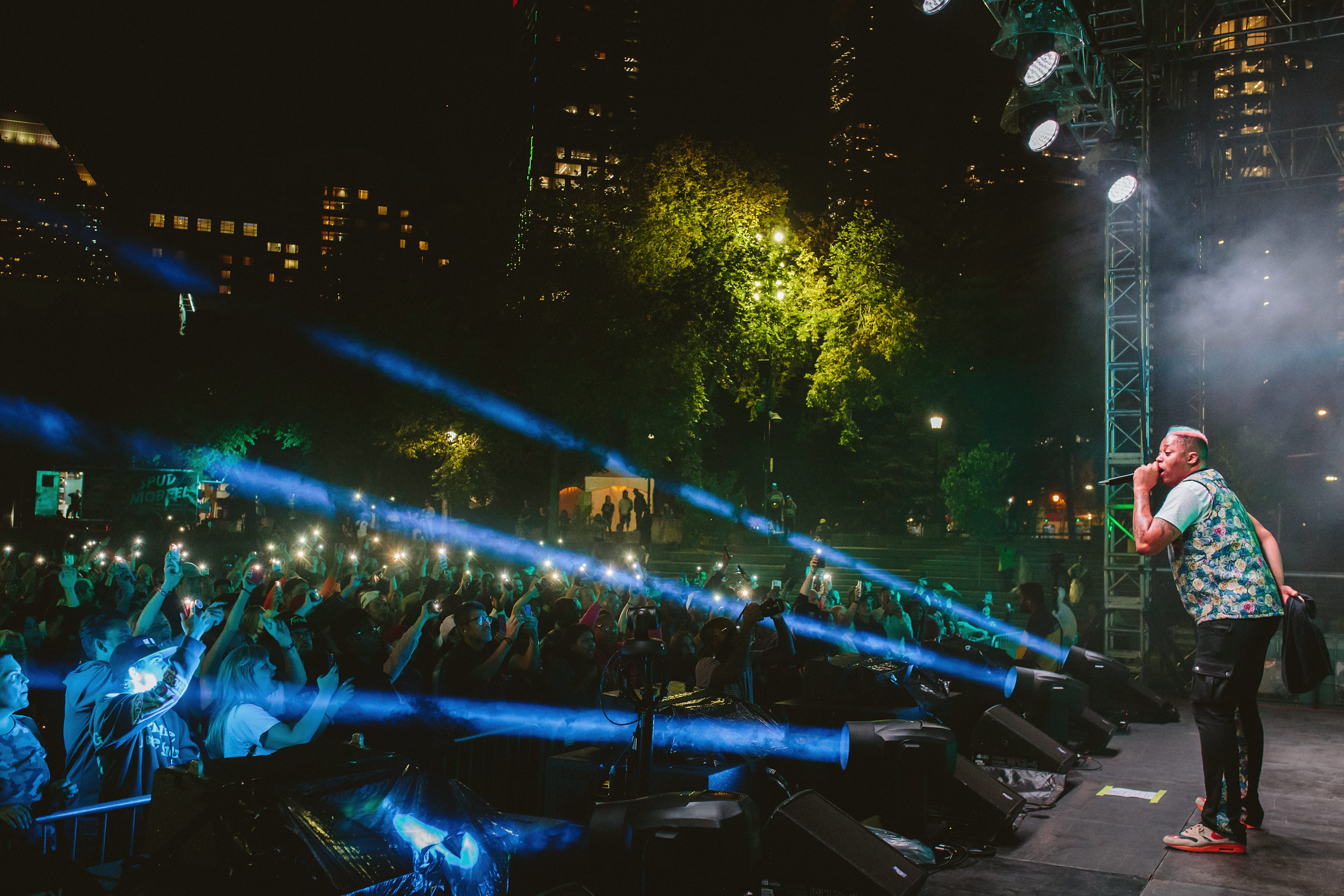 Kardinal Offishal performs at Werklund Centre's Party in the Plaza, 2023. Photo by Mike Tan.
And yet, all the burgeoning talent was seemingly cloistered in Toronto and Vancouver, without much thought given to the three provinces in between. It wasn’t until the mid-2010s that Saskatchewan and Manitoba’s scenes cultivated anything beyond regional acclaim, and Alberta wasn’t much different. Edmonton’s The Maximum Definitive received some MuchMusic love for their regional hit “Jungle Man,” and prior to renaming themselves the Hi-Phoniqs and steering more towards a soul aesthetic, the YEG collective City of Champs made their name as a DJing and breakdancing crew. The biggest name in hip hop, as far as the prairies are concerned, probably remains Cadence Weapon, Edmonton’s former poet-laureate and noted big Oilers fan.
In 2026, Calgary may not be a ‘Hip Hop City’ in the way New York or Toronto are, but there is a history that deserves note. Our hip hop roots go back to the 90s, where the snap of drums that define the genre were first heard on CJSW’s underground programs like The Groove (hosted by DJ Incognito –– now DJ O.S.U.M), and especially Mental Illness — which is now known as The Main Ingredient, and still hosted by DJ Cosm. No doubt there was a class of talented aspiring rappers, but beyond Gareth Austin — a pioneering Calgarian rapper and DJ, who went by G.O.D. (Gareth On Display) and is sadly more famous for his still-unsolved disappearance than his music — there really weren’t many figures growing, as one famous rapper would have it, like roses from concrete.
Not until 2002, that is, when the aforementioned DJ Cosm teamed up with Tarik Robinson and formed Dragon Fli Empire. Conquest, their locally distributed debut album, is now universally seen as a city standard, and the album that allowed other local talent to prosper. It also helped unlock a fanbase that the city hadn’t quite leaned into, and their shows brought out an audience that wasn’t readily apparent to the incumbent purveyors of the city’s nightlife.
Enter The Smalltown DJ’s. “Smalltown Pete” Emes and “Smalltown Micheal” Grimes met in the late 90s after Pete moved back from Ontario and Michael moved back from Korea. While away, they both immersed themselves in DJ culture and decided they wanted to bring it to Calgary in a new way. Thus, in 2005, they opened HiFi (which sadly closed its doors in 2020). HiFi became Calgary’s resident hip hop hub, and in opening its doors, it opened up the possibilities further for the import of rap talent to Calgary.
Twenty-one years later — in line with the rest of the world, I suppose — the demand for rap is at an all-time high in Calgary. So far this year we have had independent performances from Freddie Gibbs and Danny Brown. A$AP Rocky just sold out the Saddledome for his Stampede Concert. DJ Shadow will be bringing the 25th anniversary of Endtroducing to the Palace in October, and a week later Digable Planets will be reuniting on the same stage. Sled Island and the Calgary Folk Music Festival have made it a crucial aspect of their booking to acquire some of the best rap talent available, going beyond the expected punk/metal and folk/roots (respectively) that would otherwise be expected of them. In just the last three years they have brought clipping., billy woods, Oddissee, Killer Mike, and The Roots to Calgary.
This is all to say that the appeal of hip hop music in Calgary is probably stronger than the average Calgarian would assume. While for the most part our country roots are still the most prominently showcased (and the punk and metal communities thrive in ways other genres just don’t seem to), like our tiny-but-mighty Jazz scene, there is a growing contingent of rap appreciators and do-ers that cannot be ignored. We haven’t even begun to discuss the more recent talent that has emerged, nor the waves that talent has been making — though we will, next time. Our history in the matter is short yet, but that’s because it is still being made.
Stay tuned for part 2!
Header image: Kardinal Offishal performs at Werklund Centre's Party in the Plaza, 2023. Photo by Mike Tan.
Thomas Johnson is the tallest rap critic in Calgary. His work has yet to appear in the Louvre. You can find him listening to all sorts of everything at Blackbyrd Myoozik.
Share this post