/DonateIcon.svg)

Bones, caves, and the discovery of a lifetime.
Years ago, Dr. Lee Berger made a discovery that he couldn’t actually physically access.
Berger, who will deliver a National Geographic Live lecture at Werklund Centre on May 31 and June 1, is a paleoanthropologist who studies petrified bones, teeth, footprints and cultural artifacts to construct a story about the past –– a real-life Indiana Jones of sorts, someone who crawls around in caves searching for the origin stories of the planet –– except for the time he wouldn’t fit into one of the most remarkable caves of them all.
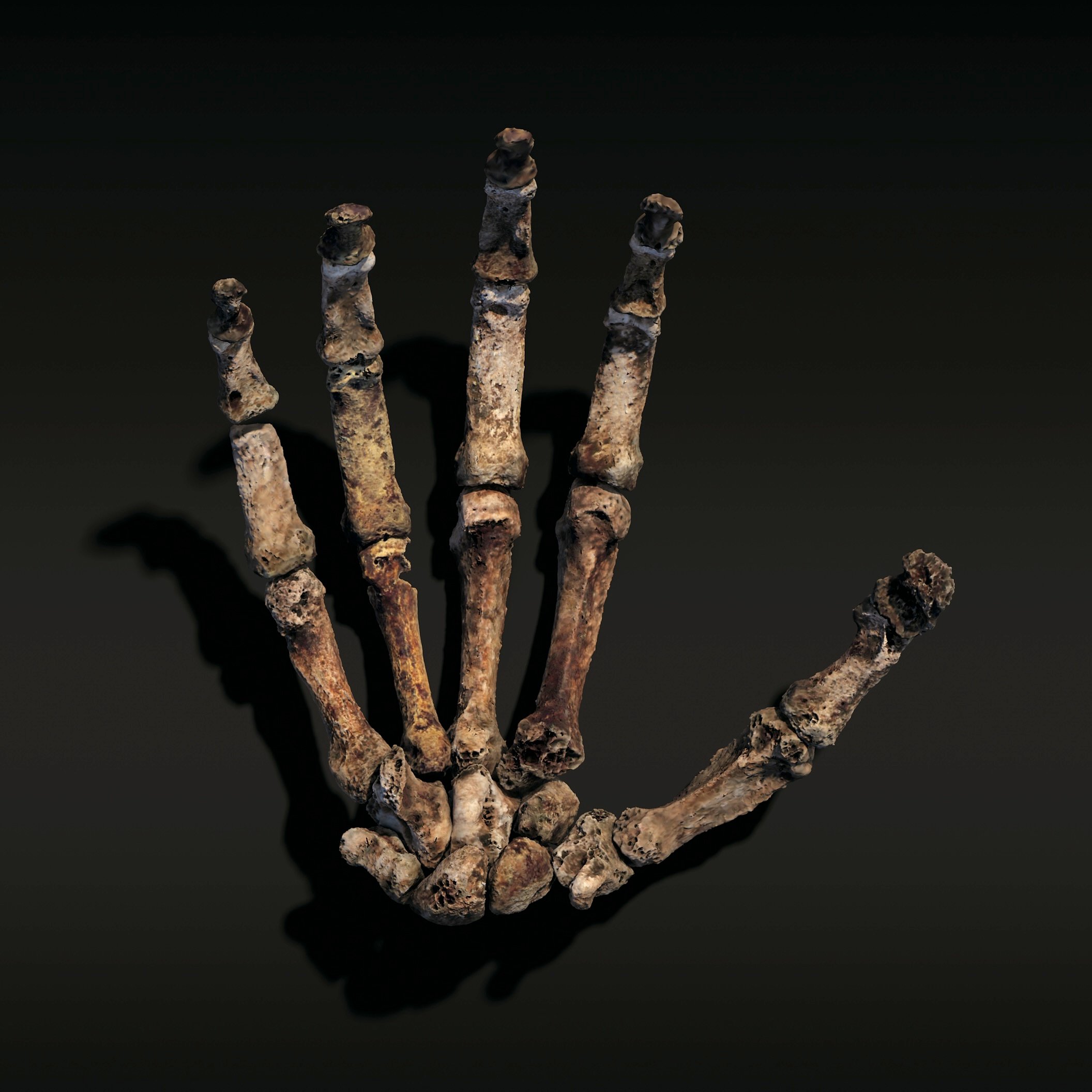
It’s all there in Unknown: Cave of Bones, a popular Netflix documentary about the work of Berger and his team of explorers and analysts as they uncover the story of the discovery of homo naledi, a species that the explorers believe lived in South Africa around 250,000 years ago.
In the documentary, Berger’s team of paleoanthropologists spend years excavating an area called the Rising Star Caves in an area of South Africa known as the Cradle of Humankind that led them down to a place called the Dinaledi Chamber, an area deep underground that’s accessible only by squeezing through the Chute Labyrinth, a lengthy (12 metres or 39 feet), narrow –– 18-20 centimetres or 7-8 inches in places –– passageway that for a long time, was an insurmountable obstacle for a big man like Berger to negotiate.
Those logistical challenges led to Berger enlisting a crew of “underground astronauts” who possessed the academic background, temperament, experience –– and body type –– to make it down to the Dinaledi Chamber, which was full of bones and other indicators that suggest it was a burial ground for homo naledi – creating a whole new sort of timeline for the paleoanthropology set to wrap their imaginations around.
In a way, it was a reset of the timeline of civilization.
Pretty big deal!
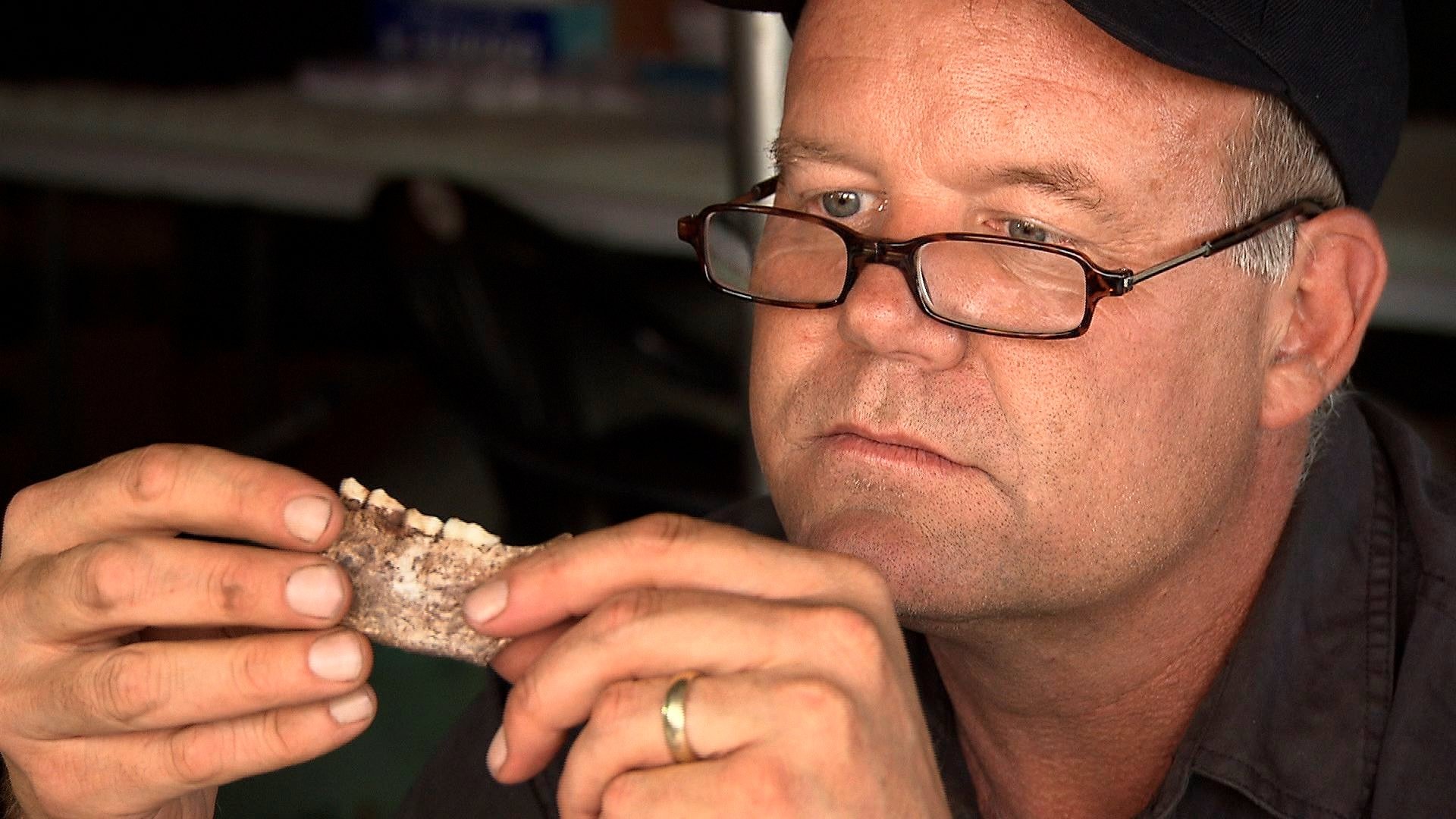
The Greatest Age of Exploration is Now!
Berger is an infectiously enthusiastic person. Reached by Zoom, walking through Hyde Park in London in mid-April, he is all exclamation points, as he recounts his many journeys and what they’ve taught him over the decades, not only about ancient species that walked the African savanna hundreds of thousands of years ago, but also about how all of us live and experience life now.
Berger believes we are living in the greatest age of exploration in human history –– which, thanks to technology, is more accessible than it’s ever been.
“I don’t think there’s any doubt about that,” Berger says. “You know, we (have always) had this idea of exploration as sort of a solo or small team endeavour where people would go out and ostensibly go to somewhere no one had ever been to before –– which was a lie. It was (actually) nowhere a white guy in a boat had ever been to before.
“What we didn’t have was not only the ability to apply technology that in the last decade to 15 years has so outrageously changed all of our lives –– I don’t have to explain to anyone what this last decade and a half has done –– for everything from the phone in your pocket that carries within it all of human –– and now non-human –– knowledge.
“I mean, think of that!” he says.
“The ability to have every single thing that humankind has ever discovered, thought of or identified in your pocket at all times!”
Dinaledi Chamber
Back to that Dinaledi Chamber in the Cradle of Humankind for a second.
When Berger was assembling his team, he put out a call for skinny Ph.Ds willing to go down in an ancient cave through a chute that’s only 18-20 cm wide for a long stretch –– and what he ended up with was a half a dozen women.
“I have to first be transparent –– I got 46 applicants that actually qualified to get in there,” he says. “I shortlisted those down to a process of elimination of the right skills, and obviously, the physique and build.
“My initial team was five women and a man,” he said.
“Not because of any reason other than that was what I had shortlisted to that (set of specifications). I needed six of what would eventually be called underground astronauts –– but the man had lied about his body size.
“He was intending to lose the weight, but I couldn’t risk that, and so candidate seven was (also) a woman,” he adds.
“So there was some chance to the fact that they were (all) women in the first instance,” he says, “but what I did find was that they brought a unique and powerful aspect that had probably never been in such a dangerous and extreme sort of expedition.”
Exploration: A Field Guide
Berger has a lot of experience exploring old boneyards and piecing together the story of long ago, but he also has a few pieces of advice for would-be Alberta explorers where there are old dinosaur bones that can compete with the Cradle of Humankind and other prehistoric hotspots around the globe.
“What I’ve learned is you don’t have to go where other people haven’t been,” he says. “Often the greatest discoveries are where everyone else thinks they’ve been.
“They may have been there, but they haven’t seen it before,” he says. “I call it Backyard Syndrome. It’s a theme that I talk about often in lectures and discussions with others.
“It’s the idea,” he says, “that sometimes the places you know the best are the places you understand the least.”
Dinaledi Chamber Live!
That leads us back to the Dinaledi Chamber and the Rising Star Caves, where Berger spent eight years watching his underground astronauts recover teeth, bones, and even a tool. They uncovered evidence of fire.
Berger, who was in his early 50s, was too big to squeeze through the narrow chute that leads to the Dinaledi Chamber, so he watched from up top on monitors as the explorers expertly chronicled the experience on livestream.
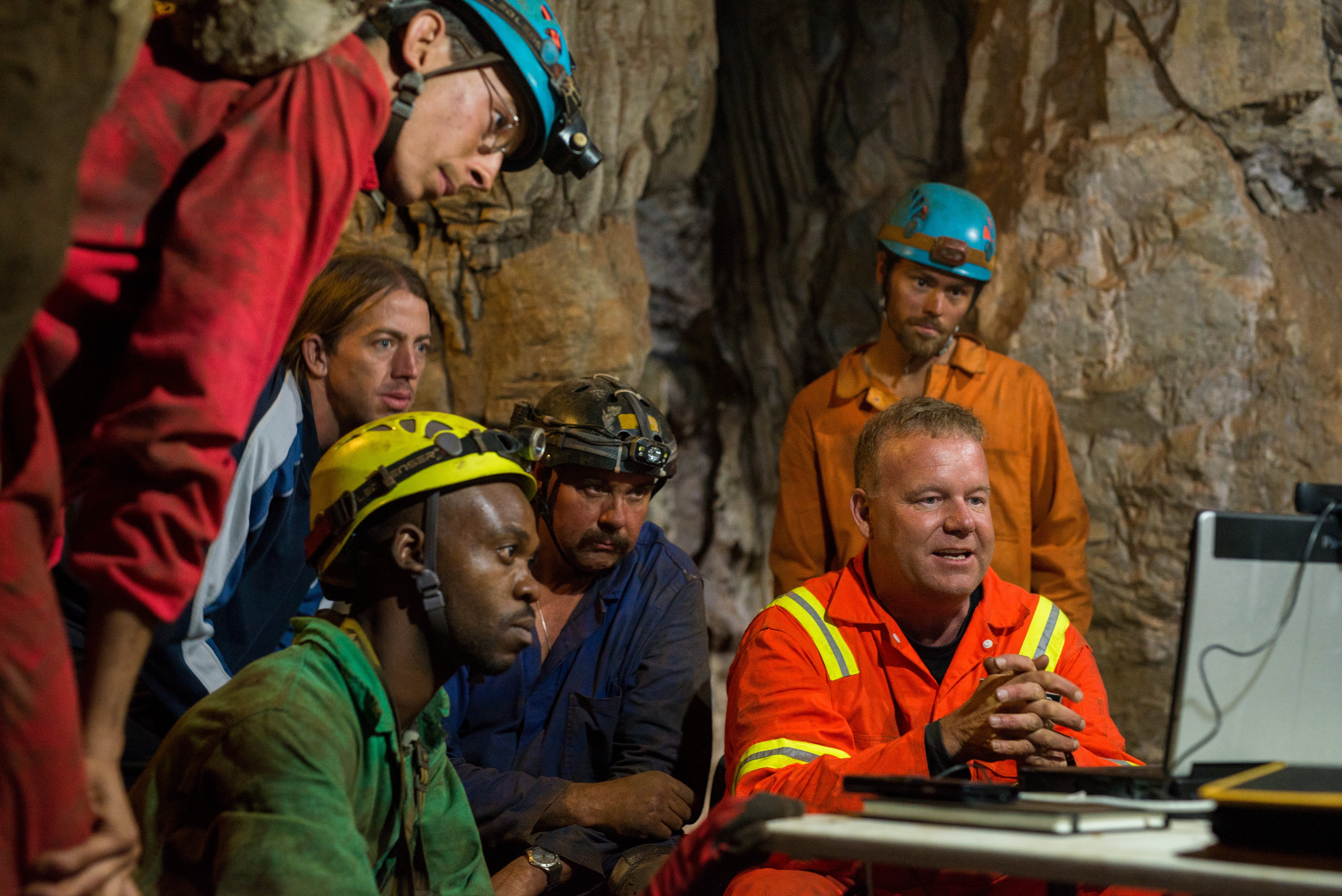
It was exhilarating even as it was frustrating for the Explorer, who was named by Time Magazine in 2016 as one of the 100 Most Influential People and in 2019 Smithsonian Magazine named him one of the Top 10 Scientific Discoveries of the Decade.
After eight years of watching the underground astronauts go down into the chamber on monitors, Berger announced to his stunned colleagues that he was going to give it a try.
It turned out that he’d been working out and had dropped around 55 pounds and was maybe skinny enough to squeeze through the narrow, harrowing chute.
And in the process of doing that, Berger discovered something new in his very own paleoanthropological backyard.
“One of the most profound moments that's happened to me –– if you’ve watched The Cave of Bones on Netflix, you’ve seen that moment where I lost all that weight (and)got into the cave,” he says.
“(I) got into the Dinaledi Chamber and (on the way down), I was actually describing the environment,” he adds, “because I didn’t want to take pictures, because I’d been watching it on screens for so long, watching through a digital filter –– I watched through the cameras we set up and from a distance.
“I wanted to experience a place, and so I narrated the journey.”
Serving as the narrator of a livestreamed journey he had observed his team members take hundreds of times gave him a fresh perspective on it.
“I was describing the first chamber –– the antechamber, we called it –– and I looked at the passage and was about to make the journey down the (narrow) passage to the Dinaledi Chamber that I knew was on the other side –– and I saw this (additional) passage and said, you know, it looks like a door –– and I stopped because on the edges of that door, there were carvings.”
The thing was, homo naledi wasn’t a human species. If they actually made carvings, that meant art and culture –– 250,000 years ago.
“I knew this was probably the first –– and last –– time I would ever be in this space,” Berger says.
“I’d had to make choices going into it. It could cost me my life if I couldn’t get out of there.
“And so I was keen on absorbing everything –– and there were these carvings that we’d missed.”
“And that led to other discoveries that I’ll talk about in this (Calgary) lecture, but it’s that kind of lesson that I now try to both live my life by continuously, but also try to instill in others.
“Don’t give in to the Backyard Syndrome,” he says. “That’s a long-winded way of saying that’s what I would tell people up there.
“Look in your own backyard,” he says. “Look at what other people say. It’s already been looked over.
“Try to see the anomalies. Find the new things that others have perhaps seen but haven’t recognized or understood.”
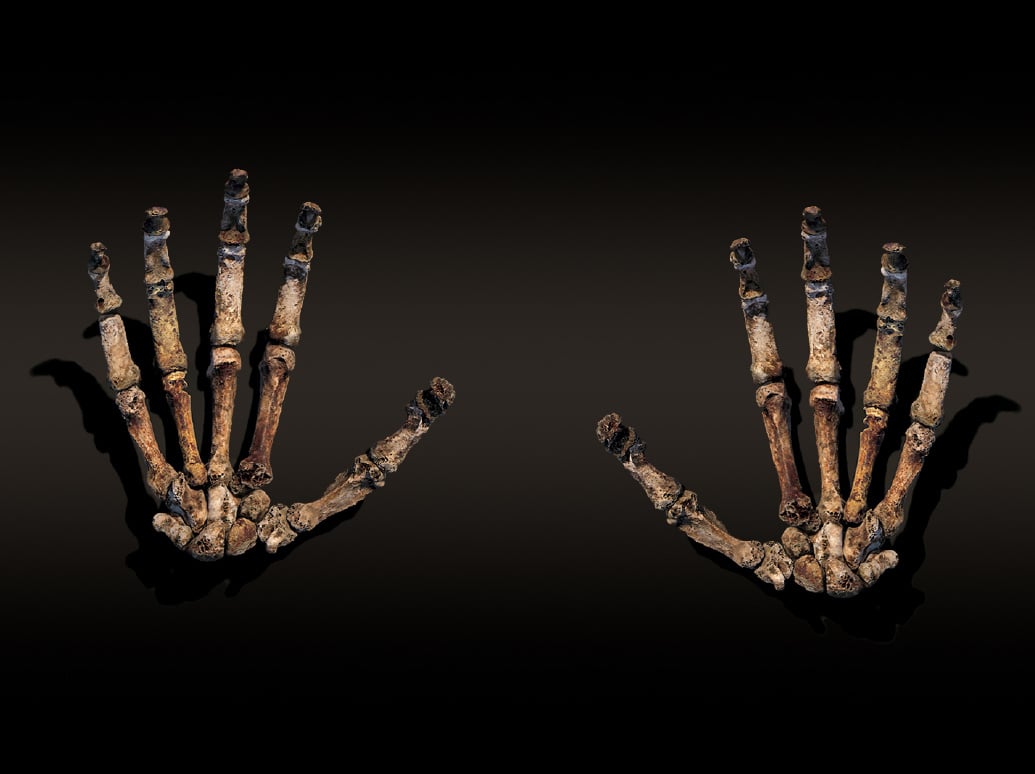
The Underground Astronauts
All of which brings us back around to that first all-female crew of underground astronauts.
Did the fact that they were women change the way they experienced the Dinaledi Chamber?
“What I did find was that they brought a unique and powerful aspect that had probably never been in such a dangerous and extreme sort of expedition,” Berger says. “It was very different from the energy six men might have brought (to the same exploration).
“Which was typical of an expedition of that type,” he adds. “And what I have since found, of course, and the lessons I have learned, is that my team is dominantly women now. And that includes the scientific and analytic side as well as the exploration side –– not only because it’s where the quality lies, but it also helps us build the next generation of explorers and scientists.”
And as for Berger himself, does he still feel as enthusiastic as he used to be for his next chapter, whatever that may be?
“Who wouldn’t be?” he asks.
“Not many Explorers get to live in the greatest age of exploration!”

Stephen Hunt is a digital producer at CTV Calgary. He was a theatre critic at the Calgary Herald for 10 years and has reviewed Alberta theatre for the Globe & Mail since 2017.
Share this post