

From Poe-inspired drama to winter wonder.
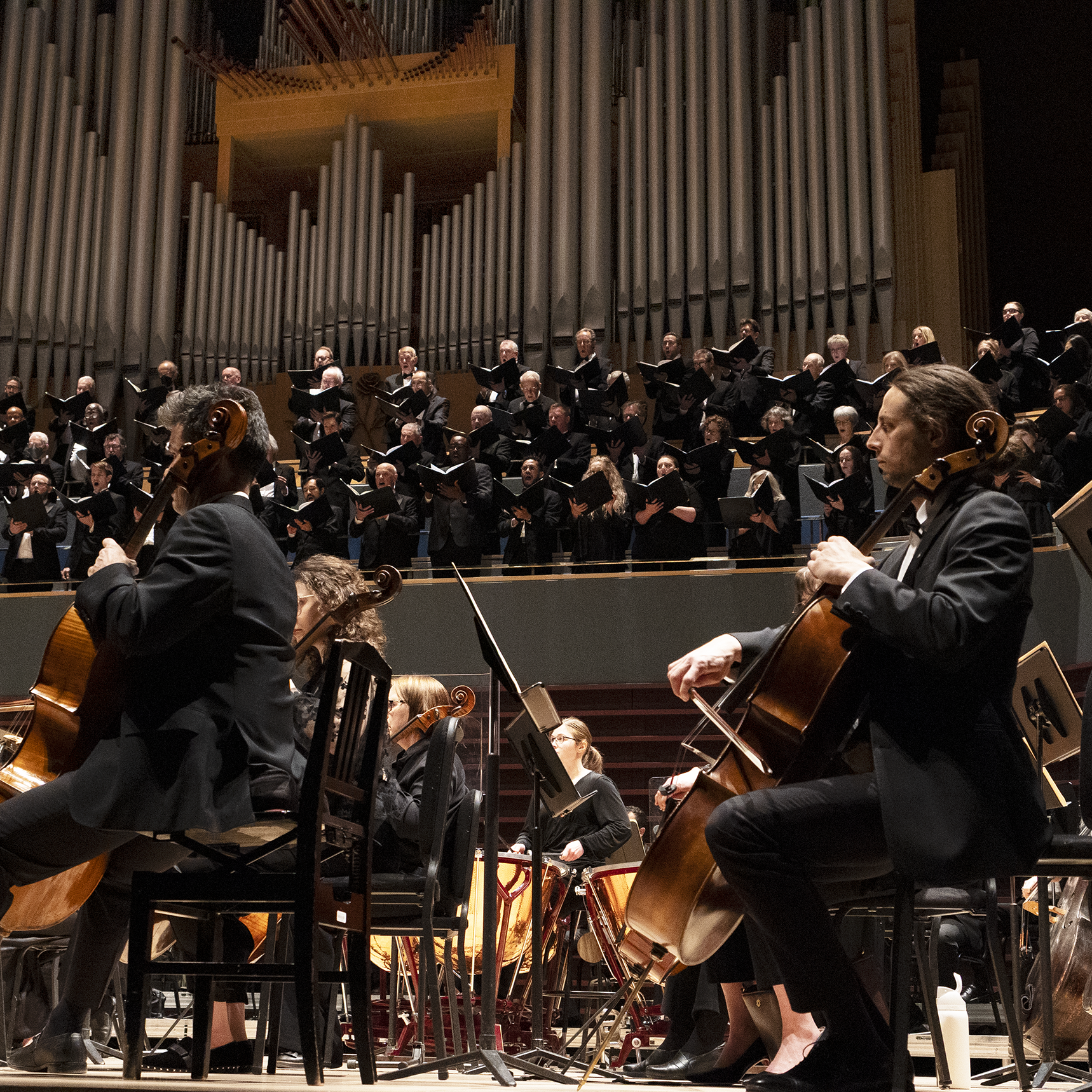
On December 4 and 5, the Calgary Philharmonic Orchestra embraces the beauty of winter as evoked by the works of composers Sergei Rachmaninoff and Pyotr Ilyich Tchaikovsky. Conductor Geoffrey Paterson — noted for his “impeccable grace” by The Guardian — leads the Orchestra for Tchaikovsky's first major work, Symphony No. 1 in G Minor (also known as Winter Dreams). But first, an ensemble of vocal soloists and the Calgary Philharmonic Chorus join in for Rachmaninoff's The Bells, or Kolokola in Russian. As you’ll see from the facts gathered below, it draws its inspiration from a quite different chill than the kind that sweeps the prairies in December.
1. While The Bells referenced in the title of Sergei Rachmaninoff’s choral masterpiece do refer to the kind affixed to sleighs, the piece is pretty much the polar opposite of a light romp like Jingle Bells. In 1907, Rachmaninoff received an anonymous letter — later revealed to be from the poet Konstantin Balmont — encouraging him to check out a poem by the American master of the macabre, Edgar Allen Poe. This work, also called The Bells, begins with these relatively cheery lines:
“Hear the sledges with the bells—
Silver bells!
What a world of merriment their melody foretells!
How they tinkle, tinkle, tinkle,
In the icy air of night!”
The poem then moves through the various stages of life, evoking wedding bells, alarm bells, and even funeral bells. Not surprisingly — Poe being Poe — the poem takes a turn for the darker:
“Oh, the bells, bells, bells!
What a tale their terror tells
Of Despair!”
Rachmaninoff was so taken by the poem that he set it to music, writing a movement for each of its four stanzas — with a few edits to the text for the choral parts courtesy of Balmont. Rachmaninoff explained his affinity for the poem, writing that “The sound of church bells dominated all the cities of the Russia I used to know — Novgorod, Kiev, Moscow. They accompanied every Russian from childhood to the grave, and no composer could escape their influence. All my life I have taken pleasure in the differing moods and music of gladly chiming and mournfully tolling bells.”
2. The composer softened the horrors of Poe’s final stanza, which includes a ghoulish creature haunting a church steeple as its bells create a terrible “moaning and groaning” din. Rachmaninoff's version ends instead with a sense of serenity and the promise of a peaceful afterlife. Given this conclusion, and because of how it documents the different stages of life, Rachmaninoff’s work has been compared to Tchaikovsky’s Sixth Symphony, which follows a similar trajectory — and which was also recently performed by the Calgary Phil.
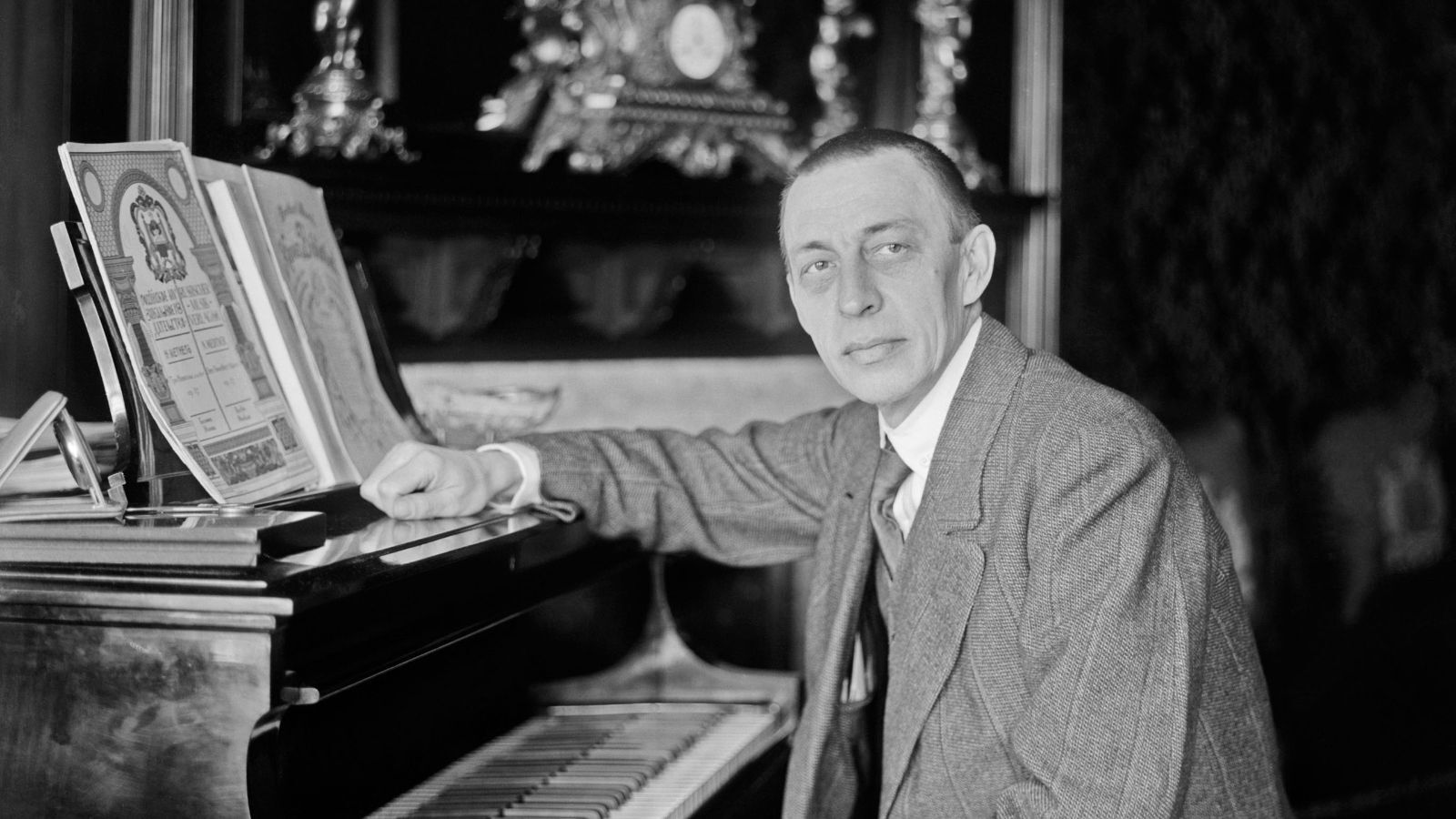 Rachmaninoff seated at Steinway grand piano. Image credit to Steinway Pianos.
3. Did you know that Rachmaninoff has a connection to Calgary beyond his works being performed by the Calgary Philharmonic Orchestra? Long before the likes of Feist and Sloan rocked The Palace Theatre downtown, the great composer himself tinkled the keys during a solo piano recital at the historic venue (though accounts vary, with some citing The Grand as the actual location). Rachmaninoff was here as part of his 1925 Western Canadian tour, which included stops in Winnipeg and Victoria. He performed works by Ludwig Van Beethoven, Camille Saint-Saëns, Frédéric Chopin, Franz Liszt, and a few of his own pieces, including Prelude in C-sharp minor, Op. 3, No. 2. That work was such a hit that Rachmaninoff felt compelled to perform it wherever he appeared, later remarking that he wished he had never written it. Needless to say, it didn’t come close to ranking as one of his own top compositions— unlike The Bells, which he held in such high esteem that he named it one of his two favourite musical creations.
See Holiday Bells + Winter Dreams on December 4 and 5 at 7:30pm in the Jack Singer Concert Hall.

Calgary Philharmonic Orchestra
For seven decades, the Calgary Philharmonic has been bringing communities together through the power of music. A pillar of the Calgary arts scene and one of Canada’s most celebrated live music ensembles, the Calgary Phil presents more than 60 concerts a season across a wide range of programming — epic classics, thrilling collaborations, rockin’ pops, family fun, and much more. The Calgary Phil also engages thousands of children each season through innovative and accessible Education and Outreach initiatives. In addition to 66 full-time orchestra musicians, the Calgary Phil has its own chorus of over 140 volunteer singers. In a typical season, the Calgary Phil welcomes over 100,000 visitors, connecting audiences to live music experiences and serving the city of Calgary by fostering creativity and belonging. Your Phil. Your Music.
Share this post