
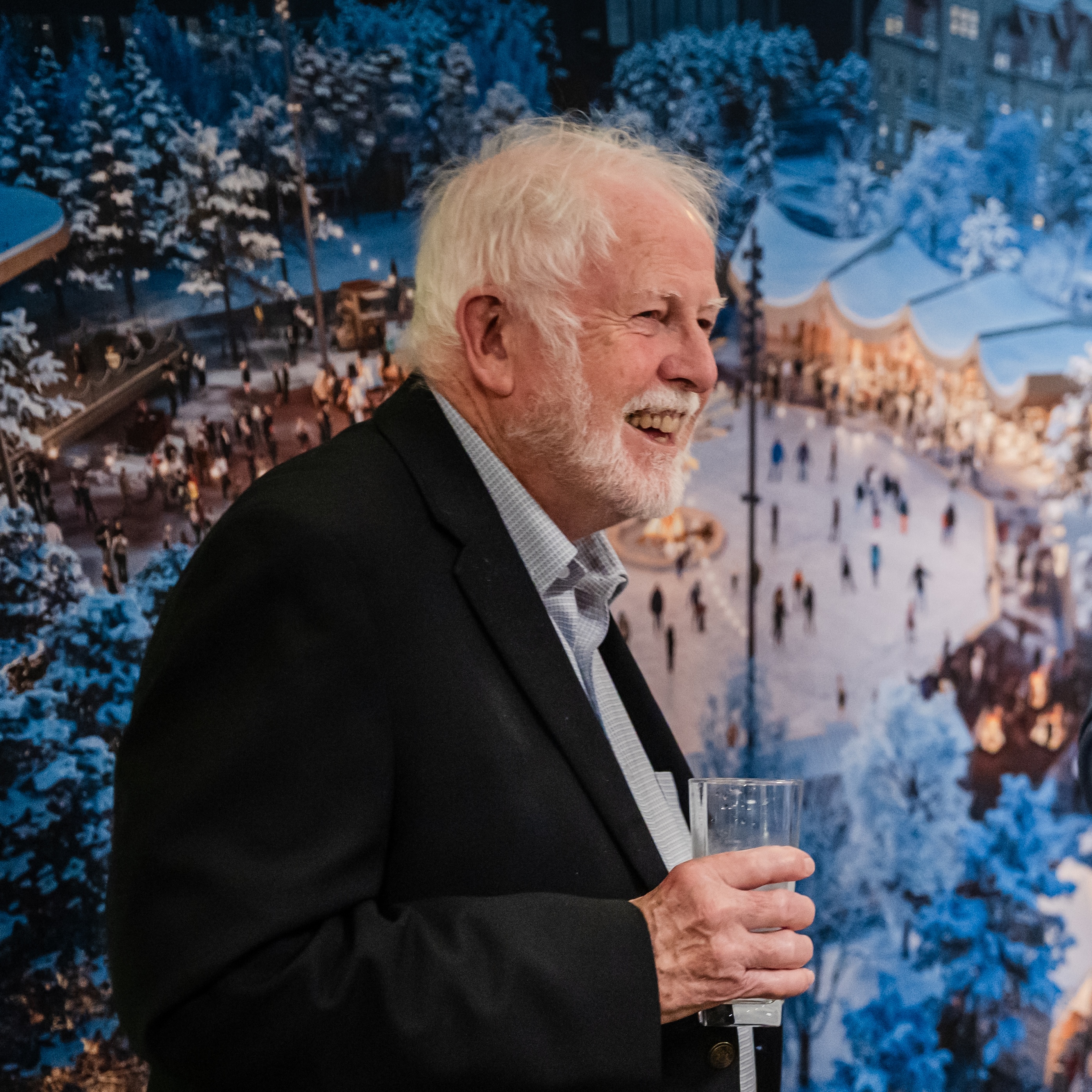
Philanthropist and naturalist Ken Havard uplifts Calgary's iconic bird.
Philanthropist Ken Havard has acquired a lot of passport stamps in a lifetime of bird-watching adventures that have taken him around the globe, interrupted from time to time by his day job as an exploration geologist and president of Firefly Resources.
“I’ve been to 90 countries,” says Havard, “seen 6,000 species –– and photographed 3,000 of them.”
Werklund Centre announced in June that Havard donated $1 million towards the Olympic Plaza Transformation project, part of which includes a unique sculpture that also pays tribute to the 1988 Winter Olympics.
It’s a 12-metre-high “snowflake” sculpture that serves as a landmark for the plaza while also casting a shadow on sunny days that will be a visual flashback to 1988, when hosting daily medal ceremonies put Olympic Plaza on TV sets around the world.
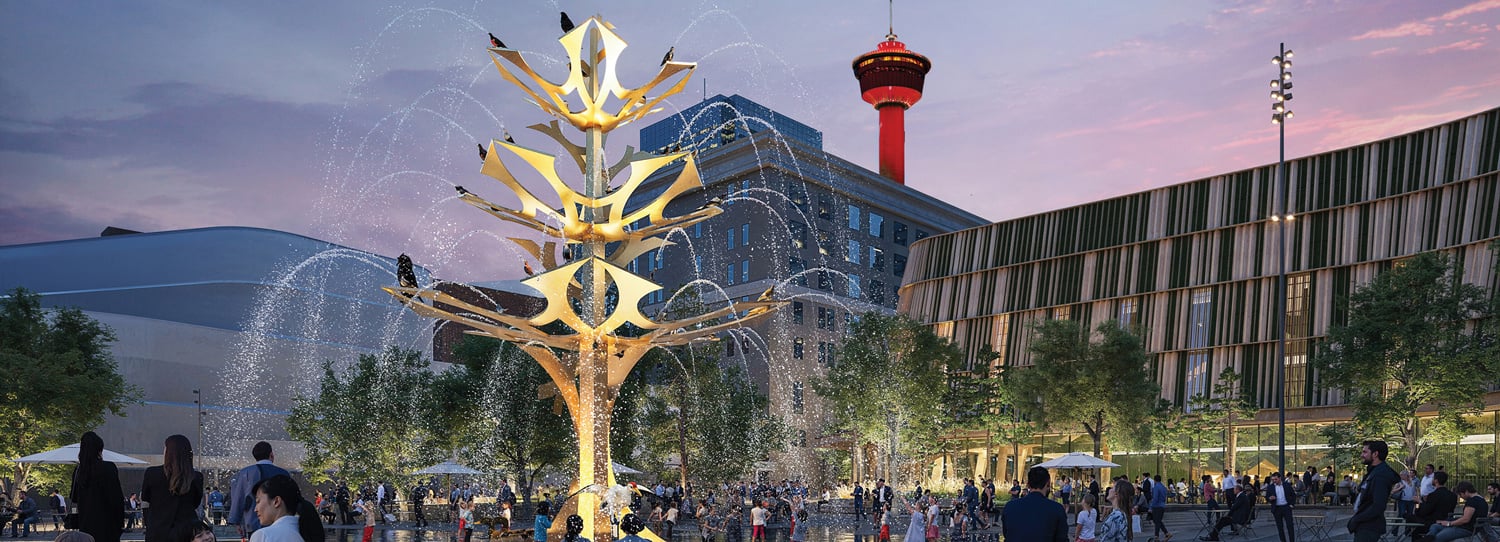 Conceptual rendering
Included on that sculpture will be an assortment of local and migratory bird species. When tasked with finding an expert who knew his local from his migratory birds, Werklund Centre CEO Alex Sarian and Greg Epton –– the Executive Director of the Werklund Centre Transformation project –– thought of Havard, a philanthropist and longtime patron of the Werklund Centre's National Geographic Live speaker series.
Havard was also a huge part of the Southern Alberta birder community, involved with organizations such as the Alberta Wilderness Association, Birds Canada and the Nature Conservancy of Canada.
Havard is also a Calgary community champion who supports organizations such as The Calgary Food Bank, Discovery House Domestic Violence Prevention Society and The Mustard Seed.
“I was talking to Greg Epton, who said, ‘there’s this beautiful sculpture that has all these birds on it. You might be interested in it,’” Havard says.
“Yeah,” he adds. “I was interested in it.”
Havard ran Firefly Resources, an exploration geology company, for many years and as the Alberta oilpatch matured, his business flourished, taking him to a lot of those 90 countries where he cultivated his passion for birding.
“It did quite well,” he says. When Epton suggested he make a donation to the 21st-century remake of Olympic Plaza, it didn’t take much convincing.
Turns out Olympic Plaza was a bit of a sore spot for the proud Calgarian.
“I missed 1988,” he says. “I had a two-year contract with the government in Fiji, doing some work, and so I was there, and I missed out on (Calgary’s Winter Olympic moment in) 1988.
“I didn’t even have a brick in Olympic Plaza!” Havard says of the iconic 80s Olympic Plaza fundraiser that enabled donors to personalize a brick that was embedded into the Plaza.
“Now I’ll have something!”
‘No magpie!’
When it comes to Calgary birds, Havard is quick to rush to the defence of the city’s most maligned bird.
When Epton and Sarian showed him a preliminary list showcasing the city’s birds, there was –– to Havard’s mind –– one glaring omission.
“It had no magpie!” Havard says, “Even though I’d say the magpie is Calgary’s most iconic bird.
“(Calgary) people like chickadees,” he says –– and in fact, in a 2022 public poll, the black-capped chickadee was voted Calgary’s official bird with 44 percent of the votes compared to 24 percent for the black-billed magpie and 17 percent for the northern flicker. The blue jay (eight percent) and red-breasted nuthatch also made the shortlist.
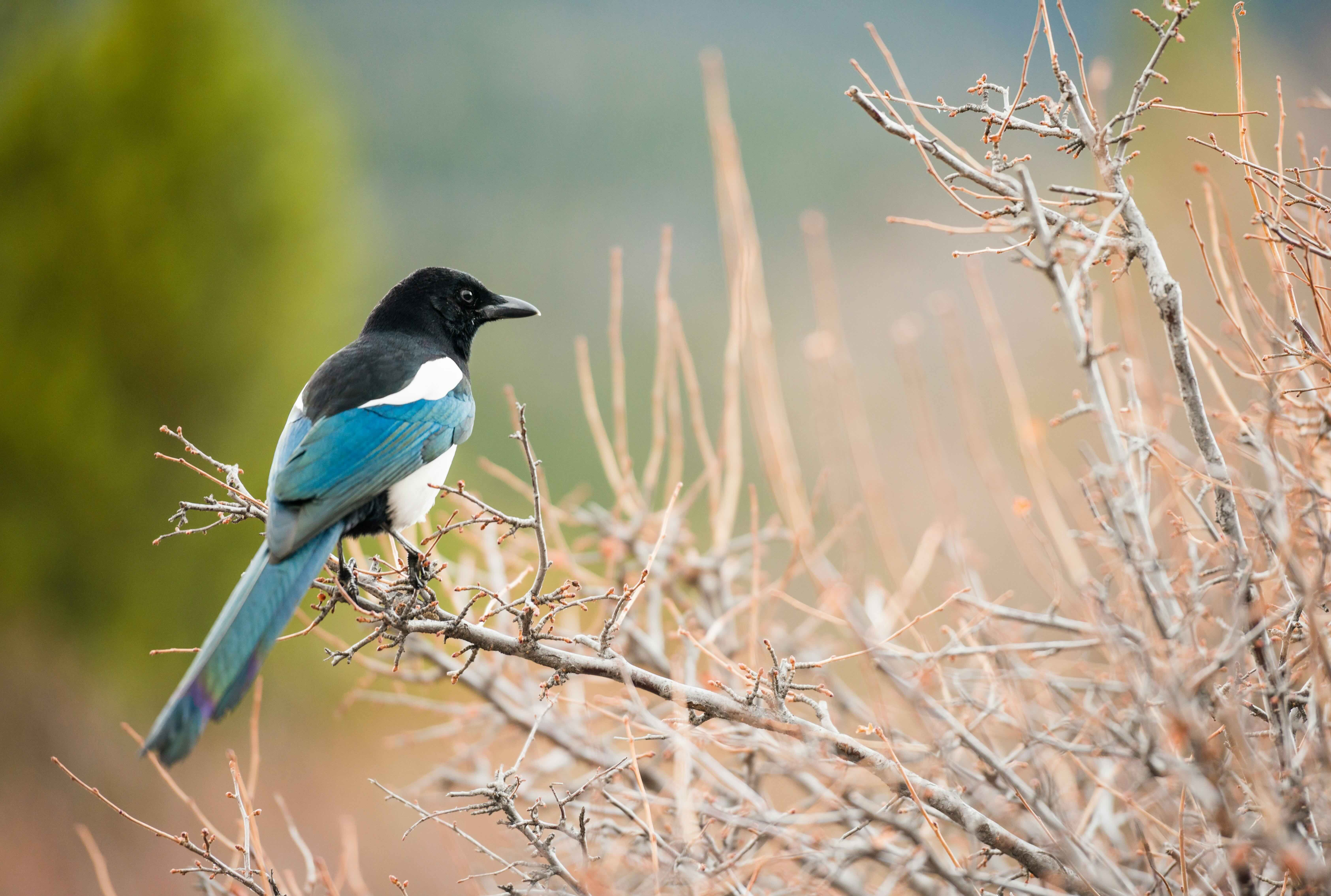
Havard thinks the pollsters got it backwards.
“People from the east come here and ask, what is that bird?” he says. “But it’s considered a nuisance bird. They are when they’re squawking.
“And the magpie only exists in Western Canada,” he adds. “It’s a better symbol for our city, but I guess people prefer the cute chickadee!”
Havard's feedback was taken to heart and the list was revised to better represent Calgary's birds –– yes, including the magpie.
Backcountry travels
Chatting with Havard about birdwatching around the world, one gets the sense that travelling to birdwatch is a heck of a lot different experience than the resort experience, even if the passport stamps look similar.
“If I go to a foreign country, I don’t go to the beach,” Havard says. “I try to go to different habitats.”
Heading into the backcountry is part of the job description for an exploration geologist, so ‘habitat’ doesn’t sound quite so daunting when Havard talks about it.
For example, there’s the area in southern Panama, where Central America connects to South America through the Darien Gap, a remote –– and notorious –– jungle that’s said to be full of huge mosquitoes, ants, spiders, snakes –– and occasionally, depending on the politics of the moment, hostages hosted by a variety of liberation movements.
When Havard visited the Panama side of the Darien Gap, he saw something else.
“Migrants,” he says. “You see these guys in these camps who are being detained because I guess they’re trying to get to the U.S.”
Elsewhere, in other countries around the world, the habitats produce gentler surprises.
“Uruguay,” he says. “It’s the only South American country with no bars on the windows. It’s full of cattle and sheep. It reminds me of the southern Alberta Foothills.”
On the other side of the world, in Central Asia, he was surprised by the familiarity of the vegetation.
“We walked the Silk Road,” he says. “There were tulips growing wild in Kazakhstan, which is where tulips originally came from. There was rhubarb growing wild.”
Then he moves on in memory to Uzbekistan, populated by unique burial sites dating back to the first to third centuries that are said to be built by Buddhist and Sufi monks.
It’s pretty clear that if you keep your eyes and ears open, there’s a lot of world to be discovered going for a walk in the woods through the forests of 90 different countries around the world.
Wine-tasting and bird watching
These days, at 82 years old, Havard has dialled down those walks in the woods –– a little bit.
After all, he’s seen just about every bird there is to see –– or at least 6,000 of them.
Now Havard takes trips to countries like Chile, Uruguay and Argentina that combine bird-watching with wine tasting.
“I was supposed to go on a Colombian trip, but that was cancelled,” he says, mentioning a tour run by the author of Birds of Colombia. “I was keen on that but there have been earthquakes and the State Department issued a Level 4 warning, so I scrapped it.”
While it sounds pretty dramatic, there are stretches of downtime when you’re waiting on a bird.
“Sometimes on a birdwatching trip, you find yourself sitting in a van staring at a ditch, waiting for some rare bird to show up. It’s not for everybody, I’d say!” Havard says with a laugh.
As for what a lifetime spent watching birds has taught him?
“Birds themselves are amazing. To think that they were originally dinosaurs,” he says, mentioning Darwin’s finches, which are 17 species of finches found in the Galapagos Islands that are famous for their evolutionary ability.
“Things have to adapt,” he adds. “It seems birds are able to adapt more than other (species).”
Creative hub of the city
And speaking of adapting, that’s exactly what Werklund Centre –– and in larger scale, the city of Calgary –– is doing, through its landmark expansion and re-imagining of the city’s creative hub, which houses four theatres (with two more under construction across the street in Olympic Plaza), a world-class concert hall, art galleries, restaurants –– and plenty of magic memories of performances past for every patron.
Havard has every intention of continuing to be a regular at Werklund Centre events in coming years.
“It’s going to put us in the forefront of Canadian (performing) art –– it will be something that the city has lacked,” he says. “We have the (Central) Library, which has become iconic and BMO Centre and the new Saddledome replacement, but an (iconic) arts centre is something every city needs.
“You go to other countries and cities, and there are places where they’re remembered for them!”
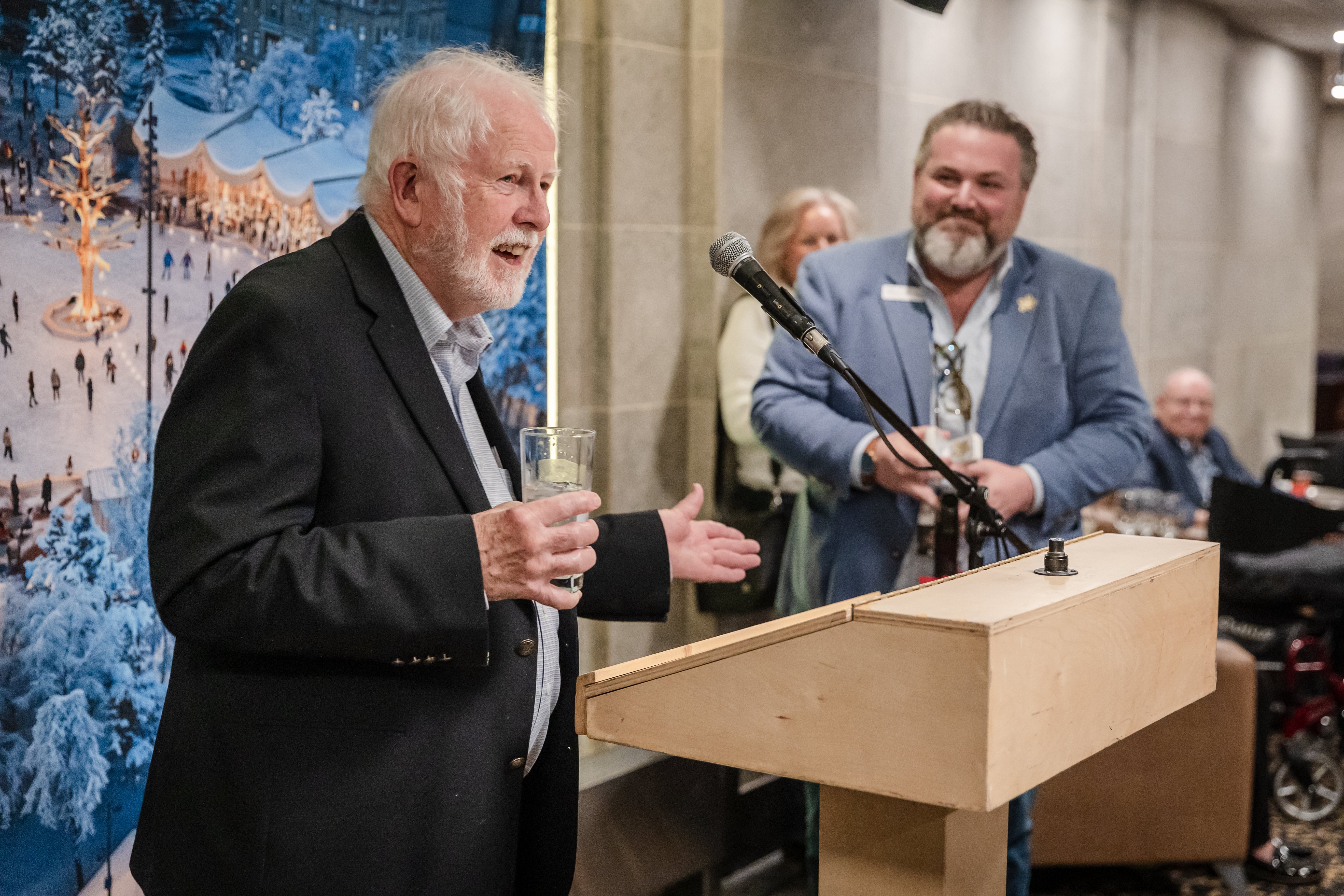 Announcement of Ken Havard's gift to the Olympic Plaza Transformation. Photo by Sara Kuefler
Werklund Centre executives clearly agree and are grateful for Havard’s support.
“Ken’s longstanding support of Werklund Centre reflects a deep commitment to the role culture, science, and shared experiences play in building a vibrant city. Over the years, he has become not only a generous champion of our work, but a trusted friend to our organization –– helping ensure our programs remain accessible to all Calgarians,” says Sarian, Werklund Centre’s President and CEO, in a media release.
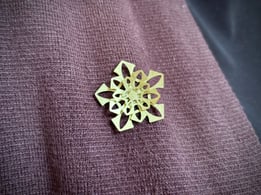
“With this gift, he is extending that same commitment to access, storytelling, and a shared appreciation of the natural world into one of Calgary’s most important public gathering spaces.”
Back to that day Havard pledged $1 million to the Olympic Plaza bird sculpture; it got him a special gift from Sarian.
“It's a pin with a snowflake design, a logo of the ‘88 Olympics when the shadow hits the ground,” Havard says.
In other words, the 2026 snowflake pin is the new Olympic Plaza personalized brick.
“A lot of people are trying to get one of those pins,” he adds.
“I told Alex if anyone else wants to put up a million bucks to help out with the sculpture, they can get their name on it too!”
Header image: Ken Havard, photo by Sara Kuefler
Stephen Hunt is a digital producer at CTV Calgary. He was a theatre critic at the Calgary Herald for 10 years and has reviewed Alberta theatre for the Globe & Mail since 2017.
Share this post