/DonateIcon.svg)




Subscribe to our
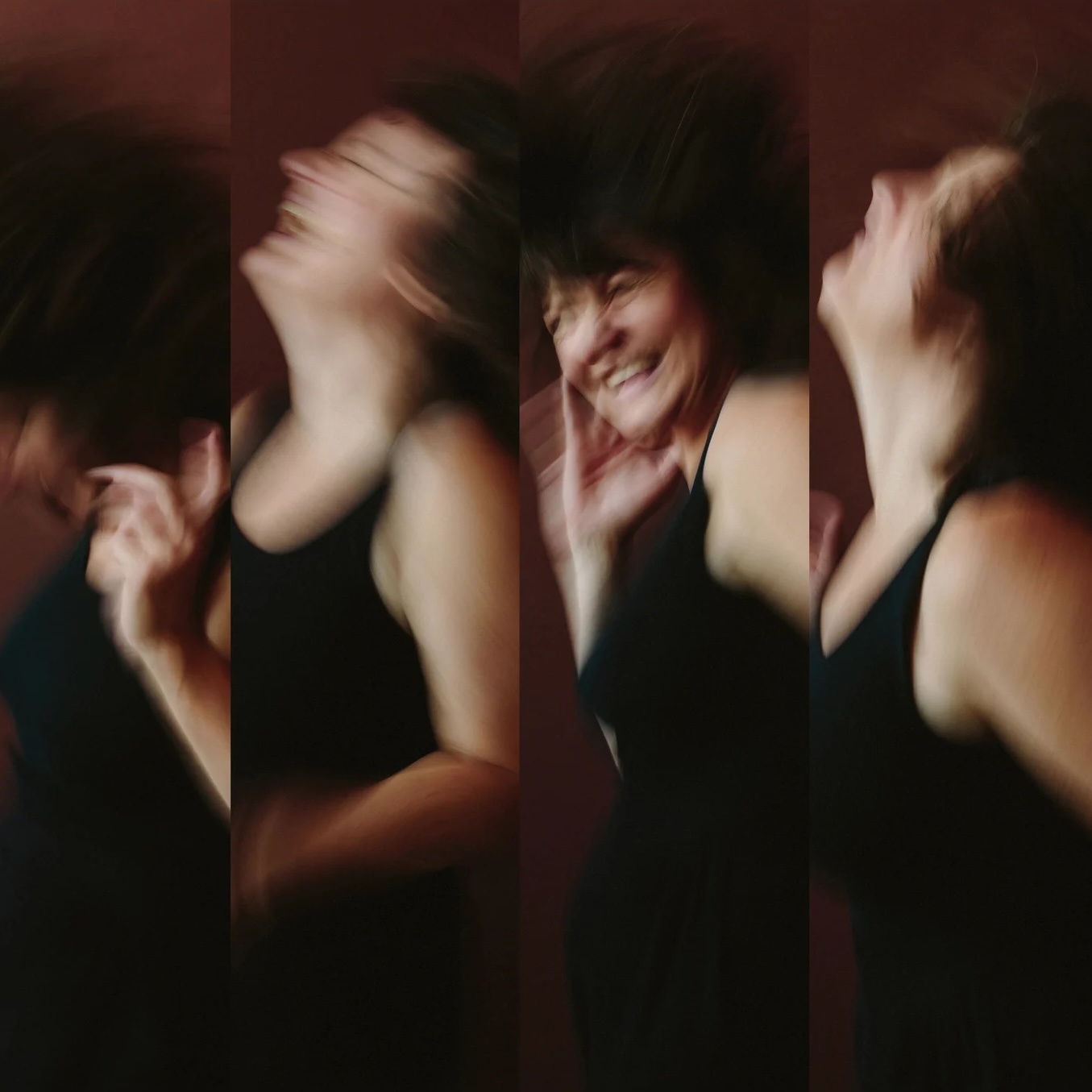
From the Fellow: Chapter 1
Thoughts on collaboration from the 2025-26 TD Incubator Fellow.
Kenna Burima, Nov 27, 2025, Werklund Centre
I am the 2025-26 TD Incubator Fellow, and I know nothing.
And yet, I find myself at the beginning of something important, and so I will start with the only two things I feel to be true as an artist.
Creative Process: the thing we do as artists to make the thing
Artistic Practice: the th(ings) we do to support our creative process
I have a list of what I call “Ings” that I religiously do:
Walk(ing)
Sing(ing)
Writ(ing)
Stretch(ing)
Meditat(ing)
These five "Ings" are what I call the non-negotiables in my life. It seems that I am not alone in the necessity of defending my own artistic practice from myself. Certainly, the requirements of everyday living must be considered. And yet, prioritizing and then defending my artistic practice has become part of the practice itself.
How we do one thing is how we do everything. If I wish to create naturally and easily, it would seem that the place to start would be to nurture ease within all aspects of my mundane life. This leads to placing myself easily within this state of flow; creativity.
I am a songwriter. It is my main mode of creativity, and regularly I am struck by how songs come to me at the moments I am not sitting at the piano or with my guitar in hand. I am most times doing a myriad of other things, the living of life. And so my creative process, a very specific process, seems to be uncontrollable in most aspects, but can be at least facilitated through the doing of mundane tasks. The “ings” of living. These actions are not defined as creative but are enablers of an Empowered Artist.
The Empowered Artist
My role as the TD Incubator Fellow is to empower the performing artists enrolled in this season’s program to become the artists they wish to become. Not what I think they should, nor their teachers, professors, family or friends, but to become what is terrifyingly calling them to step into. The Empowered Artist is one who heeds the call and says to hell with conformity and comfort. I’ve sat down with each of the artists in this season’s TD Incubator program for one-on-one sessions, and every single one has something important to say about themselves and the world they inhabit. The Empowered Artist shows a way that is off the ordinary path –– any path, really. The Empowered Artist is, frankly…powerful.
It’s a strange thing to contain artists in tiny boxes of struggle and starvation. Artists are not meant for meagre existences, and yet our very presence is stuffed into corners. We make people (nay, the very system itself) uncomfortable. Artists cannot and should not be controlled, but in these contemptible times of AI and what I call “the flattening of weird,” the artists many times celebrated are the ones who play it safe, ride in the middle of the road and serve milk toast in place of blood and guts.
I do hope to become their mentor, if they let me. Indeed, a few of them have already referred to me as such, following our session at my kitchen table, drinking coffee and discussing process, practice and the deeply personal. But the moniker of mentor is earned. To become an Empowered Artist’s mentor is to offer support, feedback, care and compassion that clears a path forward only seen by the artist themselves. I believe it is my role as a teacher and mentor to hold the Empowered Artist in a state of not-knowing for as long as possible. When we remain in un-knowing, we develop a level of comfort dancing in the space between things. And that’s where all the good stuff, the hard stuff and the important stuff happens.
The Space Between Things
Nothing we experience as solid matter is, in fact, solid. The structure of matter and the way we experience it don’t align perceptually. When we experience the stuff of matter –– namely, atoms and molecules –– vibrating at a particular frequency, we interpret it as solidity. In actuality, there is more space than stuff. I know, it doesn’t make sense, and I’m guessing I’ll always continue to try making sense of the nature of this reality.
So what do physics and matter and atoms have to do with creativity? I believe that, like the space between molecules, creativity can be found in the space between creations. It is potential energy; it is the space between nothing and something, and I have a feeling that there is more in the space between things than I will ever be able to quantify. But it begs the question: how does this creative potential step forth into the tangible? How does nothing become something?
Everything exists as a possibility until it is experienced through awareness of action. The pull of a singular note –– out of itself and into the next –– creates the experience and the perception of melody. Melody is then a line, in the same way as if we were to connect two fixed points. Hence, melody is not just a collection of notes but the perception of a relationship in a travelling order through time because one note comes after another. If notes were to “happen” at the same time, we would instead consider the grouping to be a harmony, or the vertical expression of synchronized sound. Moving from point A to point B means we are neither A nor B but in between, moving towards and moving away simultaneously. And so, though the notes initially seem to define a melody, it is in fact the space between them that ultimately creates it. The notes themselves collaborate, and it is this relationship between things that brings us to one of the pillars of this program: collaboration.
Collaboration
I define collaboration as relationship; actually, more specifically, a variety of intentional relationships co-existing simultaneously. Collaboration is an organic, nebulous thing that holds space for everyone involved, respecting and acknowledging how we create in different ways at different times.
A main characteristic of the TD Incubator program is to facilitate the collaboration between artists in four distinct groupings under the mentorship of me, the Fellow, and director Steven Conde. We intend to hold and carry these collaborations, gently guiding and nurturing the collaborative creative process of all involved to its intended culmination: performances on Werklund Centre's Engineered Air Theatre stage on January 16, February 20, March 27 and April 24, 2026.
When asked what these performances will be, I’m used to being in a state of un-knowing. If I’m honest with you (and dear reader, I try to be at all costs), I still get a little uncomfortable having to answer with “I don’t know." The expectation is killing me, believe me. And yet, I am dedicated to remaining in a state of un-knowing for as long as I can. And in the end, it is not me who will tell you. It is the Empowered Artists of the TD Incubator program.
The Creative Process
I have found a much easier time putting words to the concept of artistic practice, as in the concrete actions and utilization of th(ings) or tools that I do to support my creative process. My creative process itself, though, is much more elusive in pinning down. But why? How do I describe what I do? I make music. I make/write songs. I write. When I am doing the thing, there is an element of ping ponging back and forth between thinking a thought and bringing it out into the open like a song lyric, a melody, or an emotion. It feels like a direct line, thinking-acting, and then other times, it’s much more elusive. If I question if I’m doing “anything,” sometimes it stops. Like the observer effect phenomenon in Quantum Physics –– which states that the act of observation alters the behaviour of the particles being observed –– if I try to pin down my creative process, will it cease to work?
I believe a lot of artists “accidentally” do what we do, which is why we sometimes have such a hard time talking about our creative process. My kitchen table talks have started to eke out an understanding of how each TD Incubator artist creates. I believe by exploring, experimenting, discovering and owning their unique creative process and then nurturing a practice to support it, this pairing will deepen and expand knowledge and the experience of themselves, their art and their worth.
I believe we don’t do creativity, we facilitate it. It is fiction that I am in control of my creative process. That’s why I realized I was struggling so much to define it. Process is what we do, and the practice is how we do it. Empowered Artists are well-versed in what trips them into a state of flow. Each artist I have met with at my kitchen table already knows what helps them create. Many just need time, support and affirmation. That’s where the artistic practice comes in.
Artistic Practice as Facilitator
I believe the creative process to be a complex confluence of things. External factors that include aspects of the environment or the context: sleep, mood, time, access to resources, life events, seasons. I find that prevailing thought patterns can be the most influential. As TD Incubator Fellow, I hope to assist in catching artists when those toxic thought patterns start to emerge and embed themselves within their creative process, impeding flow and cutting them off from their creations. They’re not gonna like the antidote (no one does), but it’s practice, practice, practice.
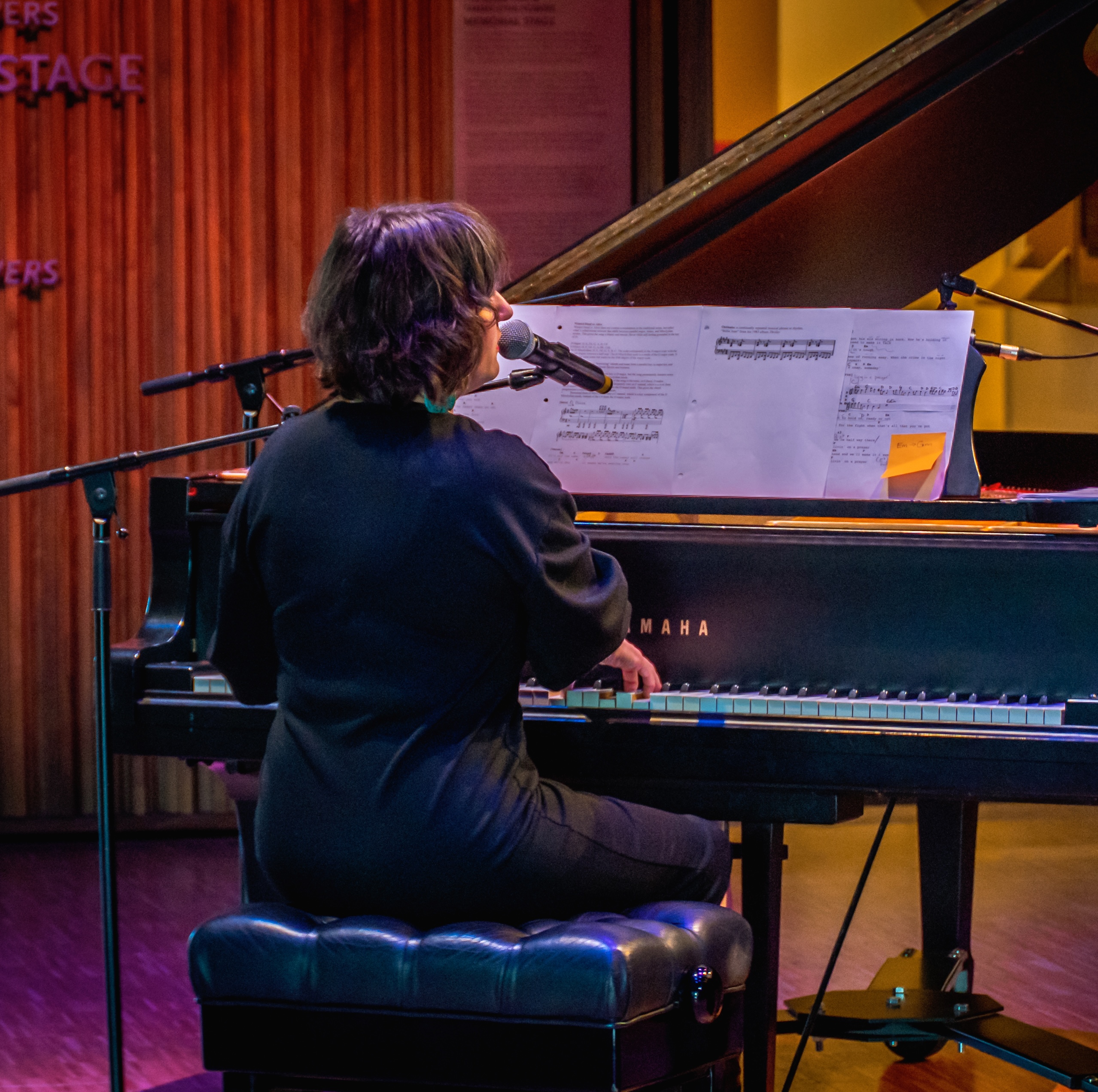
We enable the process to happen through the practice of our art. I support my process by discovering and acknowledging when my optimal time is for creating. Unfortunately, it turns out to be the early morning between the hours of 5–9 am. This means I choose to set my alarm and crawl out of bed at 5 am every morning and dedicate myself to a morning routine that prioritizes sitting at my desk to write or quietly at the piano, fumbling around for words and melodies. Even if it’s just for a little bit, I find that the daily dedication empowers creativity to happen. It is where I come into that space between nothing and something.
I have come to understand and deeply defend my creative process and have dedicated myself to building an artistic practice that serves it. This practice contains actions and intentions foundational to the support of creation. I meditate and move mindfully. I am silent and still. I journal extensively, lifting what I write and layering it into songs. I sit at the piano and meticulously notate. I record and listen on long walks. I honour rest and start again.
Through this practice, I experience an endless source of inspiration and, in turn, support others in finding their own process and practice. This is my role as TD Incubator Fellow. It is my honour to discover and define “the Ings” of each Empowered Artist that crosses my path this year. The final TD Amplify series performances, though a forward, public-facing offering, will only be a sliver of the power that is harnessed by artists empowered to be and do exactly what they want. In using creativity to express that which is inside them and connecting to others and the world around them, that to me is the true art and is my true calling.
Collaboration with each other within the space of un-knowing; this is where we nurture the Empowered Artist. I understand this to be a lofty claim, but in my hubris, I claim it. Calgary’s performing arts community will never be the same.
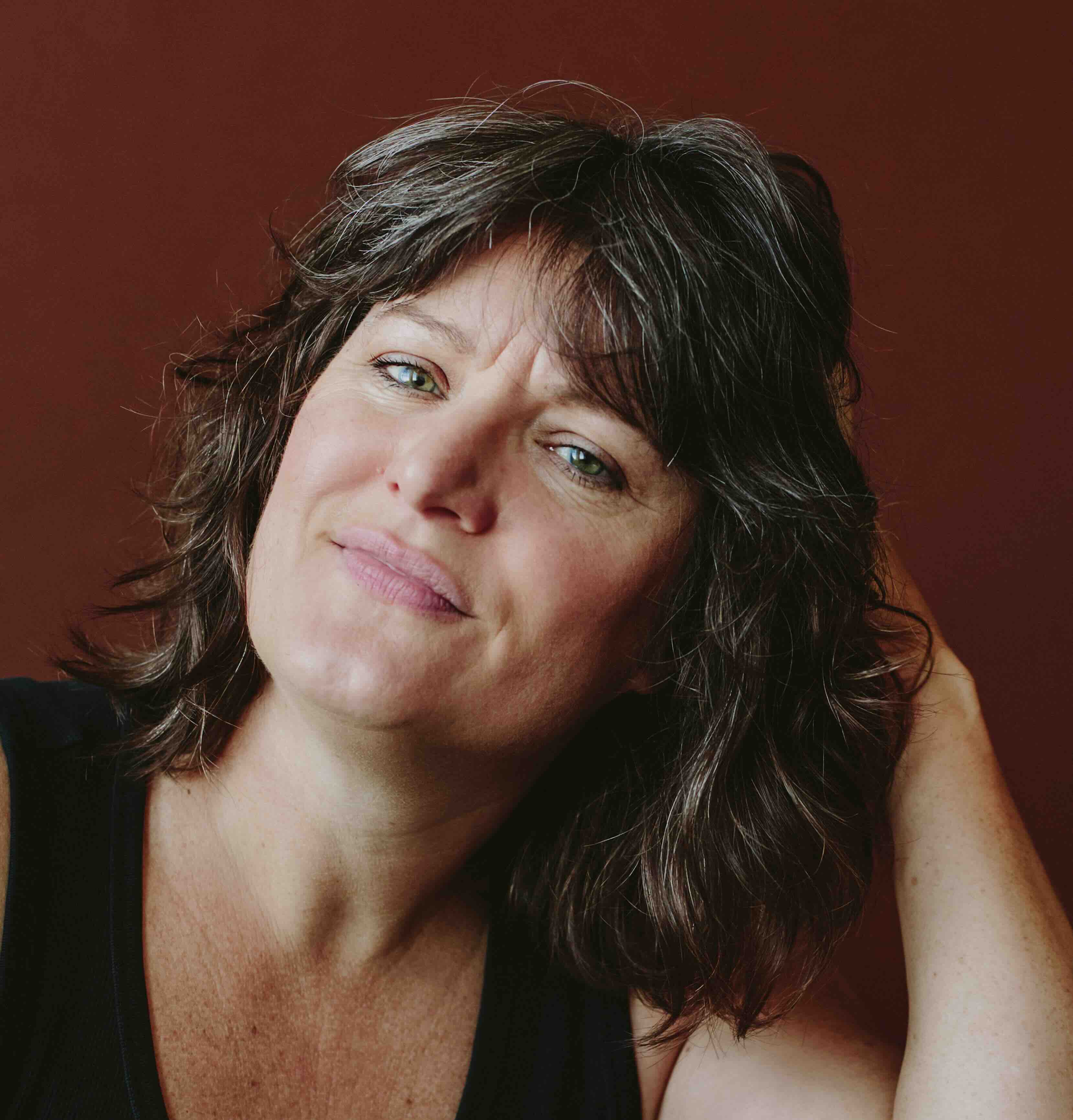
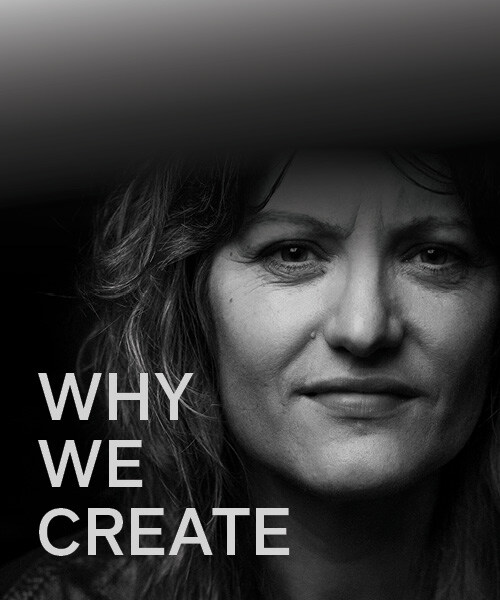
In her adopted hometown of Calgary (Moh’kinsstis, Treaty 7), Kenna has earned a reputation as a fearless collaborative, teacher, writer and songwriter. Since doing her time in the institutional hallowed halls of classical music education, Kenna’s love for all creative forms has driven her involvement in a diversity of projects. Collaboratory and theatrical work dovetails into her daytime concerns of offering singalongs, teaching music and writing about creativity. Kenna’s solo albums span classical-cabaret-pop-rock and jazz; musical affairs that draw on her vast technical and artistic know-how. The complexities of her songwriting reflect the heart of an artist who is never content to restrict herself to one genre, one project, or one ideal. At present, her new album While She Sleeps is available now in Illuminated Songbook form on her website and audio form on streaming platforms everywhere.